Modern bathroom technology turns your daily routine into a spa-like escape with smart showers, heated floors, and voice-controlled features that deliver comfort and convenience.
Digital shower systems give you precise control over your shower experience. Instead of turning knobs and hoping for the right temperature, you set it once and the system remembers. Brands like Moen, Kohler, and Cascada offer controllers that let you adjust temperature, water pressure, and spray patterns from a wall-mounted screen, your smartphone, or even voice commands.
The real benefit shows up on busy mornings. You can start your shower from bed, and by the time you walk into the bathroom, it’s already at your perfect temperature. No more waiting. No more wasting water while it heats up. The system pauses automatically once it’s ready, then resumes when you step in.
For households with multiple people, user profiles mean everyone gets their preferred settings without readjusting every time. One person might want a gentle rainfall at 102 degrees. Another prefers a powerful spray at 105. The system handles it without anyone touching a dial.
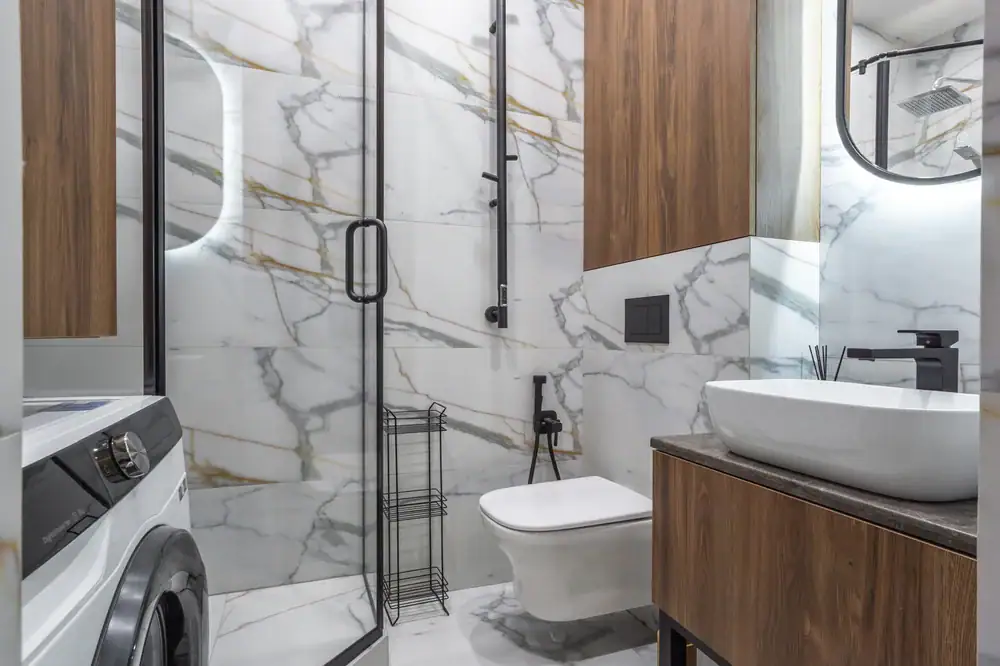
A digital shower system includes three main components: a thermostatic valve, a digital controller, and the shower outlets themselves—showerheads, body sprays, or handheld units. The thermostatic valve regulates water temperature with precision, preventing the sudden temperature swings that happen when someone flushes a toilet or runs the dishwasher. It maintains your set temperature consistently, which is both safer and more comfortable.
The digital controller is where you interact with the system. Touchscreen models display real-time temperature readings and let you toggle between outlets. You might run just the overhead rain shower, or activate body sprays for a full-surround experience. Systems like Kohler’s DTV+ or Moen’s U by Moen connect to your home’s Wi-Fi network and integrate with smart home platforms like Amazon Alexa, Google Assistant, or Apple HomeKit.
Voice control means you can say, “Alexa, start my morning shower,” and the system activates your saved preset. It sounds futuristic, but it’s practical when your hands are full or you’re getting kids ready for school. The system also tracks water usage, which helps if you’re working toward conservation goals or just want to understand your household’s patterns better. Some advanced models, like Kohler’s Anthem EvoCycle, even offer water-saving recirculation modes that deliver up to 80% water savings while maintaining full flow rate.
Installation does require opening up walls to access plumbing, so digital showers work best during a full bathroom remodel. Retrofit options exist, but they’re more limited. If you’re already planning to update tile, fixtures, or layout in Wake County or Horry County, adding a digital shower system is a logical step that doesn’t add significant time to the project. The upfront cost typically ranges from $1,200 to $3,300 depending on the number of outlets you’re controlling, but the convenience, water savings, and safety features justify the investment for most homeowners planning high-tech bathroom remodeling.
Smart showers solve problems you didn’t realize you could fix. Temperature consistency is the most obvious benefit. Traditional single-handle or two-handle valves rely on balancing hot and cold water manually, and that balance shifts when water pressure changes elsewhere in your home. A thermostatic valve eliminates that problem entirely. You set 104 degrees, and it stays at 104 degrees, every single time. This matters for safety, especially in homes with young children or elderly family members who are more vulnerable to scalding.
Water conservation is another advantage that shows up on your utility bills. Digital systems include warm-up modes that heat the water to your target temperature, then pause the flow until you’re ready. This feature alone can save several gallons per shower, which adds up over time. Some systems also include timers that gently remind you when you’ve hit a preset duration, helping you stay mindful without feeling restrictive. For families trying to reduce water bills or environmental impact, these small features make a measurable difference month after month.
The convenience factor extends beyond the shower itself. Many digital systems integrate with whole-home automation setups. You could program your shower to start at 6:30 a.m. on weekdays, synced with your alarm clock. Or you could activate it remotely while you’re finishing your coffee, so it’s ready the moment you walk in. These aren’t gimmicks—they’re time-savers that streamline your routine and reduce the small frustrations that pile up during busy mornings. When you’re juggling work, family, and everything else, even five minutes saved makes a difference.
Modern smart showers also include features like multiple spray patterns, from gentle mist to powerful massage jets, all controllable from the same interface. You can switch between a relaxing rainfall for evening showers and an invigorating spray for morning wake-ups. Some systems even include Bluetooth speakers built into the showerhead, letting you listen to music, podcasts, or the news without needing a separate device in your bathroom. The integration of these features creates a truly personalized spa experience that adapts to your needs rather than forcing you to adapt to the limitations of traditional fixtures.
Want live answers?
Connect with a American Dream Floor expert for fast, friendly support.
Heated bathroom floors turn one of the worst parts of winter mornings into something you actually look forward to. Instead of that jarring shock when your bare feet hit cold tile, you step onto warmth that radiates up through the floor and heats the entire room evenly. Electric radiant heating systems install beneath your flooring—tile, vinyl, or stone—and connect to a thermostat that controls when and how much heat is delivered.
The system works by running heating cables or mats under the floor surface. Heat rises naturally, warming the room from the ground up without the drafts, noise, or uneven heating that comes from forced-air vents. Bathrooms are ideal for radiant heat because they’re small, enclosed spaces where tile and stone are common. Those materials conduct heat well, making the system efficient and effective.
Installation cost for a typical 100-square-foot bathroom runs about $5 to $8 per square foot, or roughly $600 total for materials. Operating costs are surprisingly low—between $0.15 and $0.35 per hour, depending on system size and local electricity rates. You can program the thermostat to heat the floor only during morning and evening hours, which keeps energy use minimal while maximizing comfort when you need it most.
Electric radiant heating systems come in two main formats: heating mats and heating cables. Heating mats have pre-spaced cables embedded in mesh sheets, which makes installation faster and easier in square or rectangular bathrooms with fewer obstructions. You simply roll out the mat, secure it to the subfloor, and connect it to the thermostat. This is the most DIY-friendly option, though electrical connections should always be handled by a licensed electrician to ensure safety and code compliance.
Heating cables offer maximum flexibility for bathrooms with irregular shapes or obstacles like vanities, toilets, and pedestal sinks. You space the cables manually using fixing strips or uncoupling membranes, which gives you complete control over coverage. This takes more time during installation but ensures you’re heating exactly the areas you want without wasting energy on spots that don’t need it, like under the bathtub or inside cabinets.
Many systems work with uncoupling and waterproofing membranes like Schluter’s DITRA-HEAT, which combines radiant heating with crack prevention and moisture management. This is particularly valuable under tile, where movement in the subfloor can cause cracks over time. The membrane distributes weight evenly, prevents moisture from reaching the subfloor, and guides the heating cables into position. It’s an all-in-one solution that simplifies installation while protecting your investment.
Thermostats range from basic manual controls to programmable and Wi-Fi-enabled smart thermostats. Smart thermostats let you adjust settings from your phone, set schedules for different days of the week, and even integrate with whole-home automation systems. You could program the floor to warm up 30 minutes before your alarm goes off, so it’s already cozy when you step out of bed. Some models include floor temperature sensors that prevent overheating and ensure consistent warmth across the entire surface. These features add convenience without significantly increasing cost, and they help you manage energy use more effectively.
Installation timing matters significantly. If you’re already planning to replace bathroom flooring as part of your high-tech bathroom remodeling project in Wake County or Horry County, adding radiant heat is a relatively minor additional step. The floor needs to come up anyway, so the extra work involves laying the heating mat and running electrical connections. The cost and disruption are minimal compared to the long-term comfort you gain. If you’re not planning a floor replacement, the project becomes more involved and expensive, so it’s worth considering as part of a larger bathroom remodel rather than a standalone upgrade.
Heated floors deliver benefits that go beyond just comfort, though comfort alone is a compelling reason. Radiant heat is more energy-efficient than forced-air systems because it heats the room evenly and doesn’t lose energy through ductwork. According to the U.S. Department of Energy, radiant floor heating systems are more efficient than traditional HVAC units. Heat rises naturally from the floor, warming the entire space without creating cold spots near windows or drafts from vents. This means your bathroom reaches a comfortable temperature faster and maintains it more consistently, often at lower operating temperatures than forced air requires.
The system also helps with moisture control, which is critical in bathrooms. Heated floors dry wet surfaces faster, which reduces the risk of slips and limits mold and mildew buildup. In a high-humidity environment like a bathroom, this matters for both safety and long-term maintenance. Faster drying times mean less scrubbing, less maintenance, and a healthier space overall. You’ll notice the difference after showers—floors dry quickly instead of staying damp for hours, and the room clears of steam more efficiently.
From a resale perspective, heated bathroom floors are a premium feature that appeals to buyers. They’re associated with luxury and modern design, which can help your home stand out in a competitive market. While you might not recoup 100% of the installation cost in added home value, the feature does contribute to the overall impression of a well-maintained, thoughtfully upgraded property. Bathroom remodels consistently rank among the top home improvement projects for return on investment, with mid-range renovations yielding 50-73% ROI according to the National Association of the Remodeling Industry. Combined with other high-end finishes like smart showers and LED mirrors, heated floors position your bathroom as a selling point rather than just a functional space.
The comfort factor also supports aging in place. As homeowners plan for long-term living in their homes, features that enhance safety and comfort become increasingly important. Warm floors are easier on joints and muscles, particularly for people with arthritis or circulation issues. The consistent, gentle heat is more comfortable than the blasts of hot air from forced-air systems, and the lack of vents means no cold spots or drafts that can be uncomfortable for older adults. When combined with other accessible features, heated floors contribute to a bathroom that works well for all stages of life.
LED vanity mirrors solve one of the most frustrating bathroom problems: poor lighting when you need it most. Traditional bathroom lighting casts shadows, creates glare, or simply doesn’t provide enough brightness for detailed tasks like applying makeup or shaving. LED mirrors integrate lighting directly into the mirror itself, surrounding your reflection with even, shadow-free illumination that shows true colors and fine details.
Modern LED vanity mirrors include features that go far beyond basic lighting. Anti-fog technology uses gentle heat to keep the mirror surface clear even during hot showers, eliminating the need to wipe it down or wait for it to clear. Adjustable color temperature lets you switch between warm light (3000K) for relaxing evening routines and cool daylight (6000K) for precise morning grooming. Memory functions save your preferred settings, so the mirror returns to your chosen brightness and color temperature each time you turn it on.
These mirrors typically feature touch controls built into the surface, making them easy to operate even with wet hands. Some models include dimmable settings that let you dial in the exact brightness you need, from soft ambient light for nighttime to bright task lighting for detailed work. The LED lights themselves are incredibly durable, with lifespans of 50,000 hours or more—that’s over 15 years of daily use before you’d need to consider replacement.
Summary:
Article details:
Share: