Planning a bathroom renovation in 2026? Explore sustainable materials like recycled glass tile, bamboo vanities, and low-flow fixtures that reduce environmental impact without compromising style or performance.
Sustainable bathroom materials go beyond a single eco-label. They consider the full lifecycle—how resources are sourced, what happens during manufacturing, how the material performs in your home, and what occurs when it’s eventually replaced.
Real sustainability means materials that reduce environmental impact while actually improving your daily experience. That includes better indoor air quality from VOC-free finishes, water conservation from efficient fixtures, and durability that eliminates frequent replacements. The best sustainable materials also support responsible forestry, divert waste from landfills, or use rapidly renewable resources.
In 2026, these aren’t compromises. They’re advantages. Sustainable bathroom materials now match or exceed traditional options in performance, aesthetic range, and long-term value. For homeowners planning eco-friendly bathroom renovations, the choices have never been better.
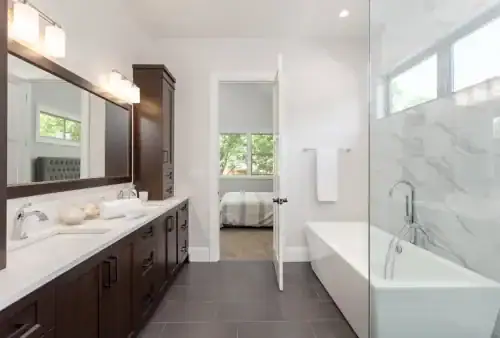
Recycled glass tile transforms post-consumer waste—discarded bottles, windows, and glass products—into stunning bathroom surfaces. The manufacturing process crushes glass waste and reforms it into durable tiles that catch and reflect light in ways traditional materials simply can’t match.
These tiles offer zero water absorption, making them ideal for shower walls, bathroom floors, and backsplashes. They resist chemicals and hold up beautifully in both saltwater and chlorinated environments. The translucent qualities create depth and dimension that shifts with changing light throughout the day, adding visual interest that feels organic rather than static.
From a sustainability standpoint, recycled glass tile diverts significant waste from landfills while requiring substantially less energy to produce compared to manufacturing new glass. The process reduces carbon emissions and conserves natural resources. Many manufacturers now offer recycled glass tile in formats ranging from uniform subway styles to intricate mosaics, with finishes including glossy, matte, and iridescent options.
Installation follows standard tile methods using low-VOC adhesives and grouts. The tiles pair well with other sustainable materials like bamboo vanities or natural stone accents. Maintenance is straightforward—the non-porous surface resists staining and wipes clean easily. For homeowners in humid climates like Wake County, NC or Horry County, SC, the moisture resistance provides practical benefits alongside the environmental advantages.
Recycled glass tile costs are now competitive with mid-range traditional tiles, and the unique aesthetic often increases perceived home value. It’s one of those rare materials where sustainability and visual impact work together rather than against each other.
Bamboo vanities represent one of the most compelling sustainable choices for bathroom renovations. Technically a grass rather than wood, bamboo reaches harvest maturity in just three to five years compared to 20-30 years for traditional hardwoods. This rapid growth cycle makes it genuinely renewable without requiring pesticides or fertilizers during cultivation.
The material itself brings natural water resistance thanks to its closed-cell structure, making it well-suited for bathroom humidity. Bamboo’s Janka hardness rating often exceeds 1,300—comparable to or harder than many conventional hardwoods like oak or maple. This translates to durability that withstands daily use without excessive wear.
Aesthetically, bamboo offers clean, modern lines with a neutral tone that complements virtually any color scheme. The natural grain can run horizontally or vertically depending on how manufacturers stack and glue the bamboo strips, giving you options for visual texture. Beyond natural finishes, bamboo accepts stains and paints well, allowing customization to match your specific design vision—from clear-coated natural looks to painted finishes in any color.
When selecting bamboo vanities, look for sustainably harvested options and check that the bamboo is properly sealed for bathroom use. The grain orientation is largely aesthetic preference rather than functional difference, though you’ll want to see samples of both to determine which appeals to you. Pair bamboo vanities with vessel sinks in hammered metal or glass for contemporary style, or recessed porcelain sinks for more traditional aesthetics.
For countertop materials, bamboo vanities work beautifully with recycled glass surfaces, stainless steel, or traditional stone options. If you’re committed to an entirely eco-friendly approach, bamboo countertops are also available, though they require diligent sealing and maintenance in wet bathroom environments.
The combination of rapid renewability, natural moisture resistance, durability, and design flexibility makes bamboo vanities a practical sustainable choice rather than just a feel-good one. They deliver real performance while reducing demand on slow-growth forests—perfect for homeowners pursuing sustainable bathroom remodel projects.
Want live answers?
Connect with a American Dream Floor expert for fast, friendly support.
Low-flow fixtures have come a long way from the weak, disappointing performance that plagued early water-saving models. Modern low-flow technology uses improved engineering—aerators, pressure-compensating valves, and high-efficiency mechanisms—to deliver satisfying water pressure while using substantially less water.
The EPA’s WaterSense program sets strict performance standards, ensuring that certified fixtures save water without sacrificing user experience. WaterSense bathroom faucets use a maximum of 1.5 gallons per minute compared to the standard 2.2 GPM—a 30% reduction that saves roughly 700 gallons annually for the average family. Low-flow showerheads use 2.0 GPM or less versus conventional 2.5 GPM models, while high-efficiency toilets use just 1.28 gallons per flush compared to older models that used 3.5 GPF or more.
These aren’t just environmental numbers. They translate directly to lower utility bills month after month, with savings accumulating over the fixture’s lifetime. For a typical household, upgrading to WaterSense toilets alone can save about $90 annually—roughly $2,000 over the toilet’s lifespan. That’s real money staying in your pocket.
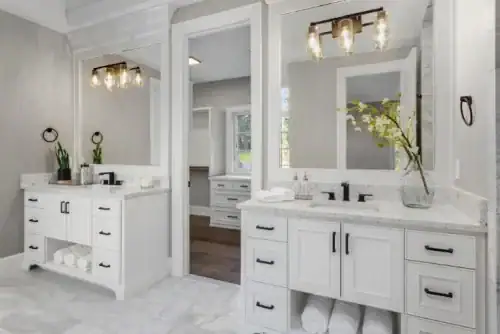
Modern low-flow faucets achieve water savings through aerators that mix air with water, maintaining pressure while reducing actual water volume. The result feels substantial at the tap—you’re not dealing with a weak trickle. Flow restrictors can even act as temporary pause buttons, letting you maintain water temperature without leaving the faucet running while you complete tasks.
WaterSense-certified bathroom faucets deliver consistent performance even in homes with lower water pressure, thanks to minimum flow requirements that ensure satisfaction across varying conditions. The technology has advanced to the point where most users notice no difference in daily tasks like handwashing, teeth brushing, or face washing. Kitchen faucets maintain the slightly higher 2.2 GPM flow needed for filling pots, though 1.5 GPM models are available if you want to maximize water savings.
Low-flow showerheads represent one of the highest-impact upgrades you can make. Showers account for significant household water use, and the average person in the United States takes an eight-minute shower using approximately 20 gallons with conventional showerheads. Switching to a WaterSense showerhead (2.0 GPM or less) can save the average family 2,700 gallons per year. Some advanced air-assisted models achieve satisfying shower experiences at just 1.6 GPM.
The key is choosing quality fixtures rather than the cheapest options. Look for WaterSense labels, read performance reviews, and consider features like thermostatic shut-off valves that automatically stop flow once your desired temperature is reached—eliminating the water wasted while waiting for hot water.
Installation is typically straightforward. Many low-flow aerators simply screw onto existing faucet tips, making them one of the most affordable and impactful upgrades available. Professional installation ensures proper fitting and optimal performance, particularly for showerheads that may require pressure-balancing valves.
For homeowners in Wake County, NC or Horry County, SC, where water conservation supports local resource management, these fixtures provide practical benefits alongside environmental responsibility. The immediate impact shows up in utility bills, while the long-term benefit contributes to sustainable water supplies for your community.
The materials you don’t see matter as much as the ones you do. VOC-free finishes—including adhesives, grouts, sealants, and paints—dramatically improve indoor air quality by eliminating or minimizing off-gassing of volatile organic compounds. Traditional bathroom products can release VOCs for months or even years after installation, contributing to poor air quality and potential health concerns.
Low-VOC or zero-VOC options are now widely available and perform just as well as conventional products. These include adhesives for tile installation, grouts for sealing tile joints, and sealants for countertops and fixtures. Using VOC-free products throughout your bathroom renovation creates a healthier space for your family while protecting installers during the construction process.
For countertops, eco-friendly options have expanded significantly beyond basic laminate. Recycled glass countertops combine post-consumer glass with natural stone, quartz, resin, and pigments to create durable, maintenance-free surfaces with inherent antibacterial qualities. The flecks of colored glass create unique visual interest while diverting waste from landfills. These countertops resist heat, scratches, and stains, making them practical for bathroom vanities.
Bamboo countertops offer another sustainable choice, though they require more maintenance and careful sealing in bathroom environments. They’re carbon-negative during manufacturing and provide twice the hardness of maple, though cutting directly on them can dull knives. Reclaimed wood countertops bring character and warmth while reducing demand for new lumber, though proper sealing is essential for moisture protection.
Paper composite countertops made from recycled paper and resin create surprisingly durable, water-resistant surfaces available in numerous colors and patterns. Concrete countertops using non-toxic mixes free of fly ash and toxic metals can be sealed with low-VOC or natural oil finishes. Even terrazzo countertops now incorporate recycled glass or stone chips set in eco-friendly bases.
The practical consideration is matching your countertop choice to your usage patterns. High-traffic bathrooms benefit from the durability of recycled glass or paper composite options. Bathrooms with lower moisture exposure can accommodate wood-based materials with proper maintenance. Work with experienced installers who understand proper sealing techniques and can recommend finishes that protect your investment without compromising air quality.
FSC-certified wood cabinetry ensures that any wood components come from responsibly managed forests with verified sustainable practices. This applies to vanity frames, shelving, and decorative elements. Pairing FSC-certified wood with low-VOC finishes creates bathroom furniture that supports both environmental and health priorities.
The cumulative effect of these choices—VOC-free adhesives and finishes, eco-friendly countertops, responsibly sourced wood—creates a bathroom environment that feels better to occupy. You’re not just reducing environmental impact. You’re creating a space where air quality supports wellness rather than undermining it. For anyone planning an eco-friendly bathroom renovation, these details make the difference between a truly sustainable space and one that just looks the part.
Sustainable bathroom materials in 2026 deliver real advantages—lower utility bills, better indoor air quality, increased home value, and reduced environmental impact. From recycled glass tile that transforms waste into beauty, to bamboo vanities that renew in years instead of decades, to low-flow fixtures that save thousands of gallons annually, these aren’t compromises. They’re smarter choices.
The key is working with professionals who understand both the materials and proper installation techniques. Sustainable options require the same attention to detail as traditional materials, with added considerations for sealing, moisture management, and product selection that matches your specific bathroom conditions.
Whether you’re renovating a master bathroom in Wake County, NC or updating a coastal property in Horry County, SC, sustainable materials adapt to local climate considerations while delivering lasting performance. For guidance on eco-friendly bathroom renovations with materials that actually work, we bring over 30 years of experience to help you create a space that reflects your values without sacrificing quality or style.
Summary:
Article details:
Share: