Natural Stone Wake County & Horry County

Floors That Last Generations, Not Just Years

Real stone. Real durability. Real beauty that doesn’t fade or chip like synthetic alternatives. From marble and granite to limestone and soapstone, you get flooring that actually increases your home’s value while standing up to everything life throws at it.

Over 30 Years Experience

Lifetime Installation Warranty

Dal Tile Emser Tile Access

Best Price Guarantee

Natural Stone Installation Raleigh Myrtle Beach

Stone That Fits Your Life and Your Space

Natural stone isn’t one-size-fits-all. Marble brings elegance to entryways and bathrooms. Granite handles high-traffic kitchens without breaking a sweat. Limestone and travertine create warm, inviting living spaces. Soapstone offers virtually maintenance-free countertops and floors. Each stone type has different hardness levels, porosity, and maintenance needs. That’s why we walk you through the selection process based on where you’re installing it, how much traffic it’ll see, and what kind of maintenance you’re comfortable with. No guessing. No regrets. Whether you’re renovating a single room or building new construction, natural stone delivers authenticity that manufactured materials simply can’t replicate. And with proper installation, you’re looking at flooring that can last 100 years.
A close-up view of several decorative ceramic tiles arranged vertically, each displaying different geometric and abstract patterns in blue, brown, and gray tones—perfect inspiration for flooring installation in Wake County or NC and Horry County, SC.
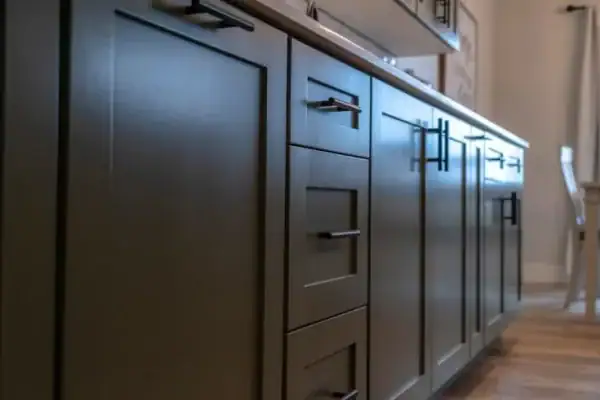
Low-angle view of modern kitchen cabinets with sleek, dark-colored doors and contemporary black handles. Featuring light wooden flooring expertly installed by Flooring Installation Wake County, NC and Horry County; a dining chair appears in the background.

Dal Tile Emser Natural Stone Selection

Premium Materials From Suppliers Who Actually Matter

We carry Dal Tile and Emser Tile because they’re the industry standard for natural stone quality and selection. That means you’re choosing from marble, granite, limestone, travertine, quartzite, soapstone, and slate that’s been properly sourced, cut, and finished. Dal Tile offers natural stone in everything from traditional tile sizes to extra-large slabs, mosaics, and decorative pieces. Their selection includes stones mined from quarries around the world, with each piece meeting strict quality standards. Emser Tile brings similar quality with extensive porcelain and ceramic options that authentically replicate natural stone when budget or application calls for it. Having access to these suppliers means you’re not limited to what’s sitting in a warehouse. You get actual selection. Real options. The ability to see samples, compare finishes, and choose stone that fits your specific vision. And because we’ve worked with these materials for over 30 years, we know which stones work best for different applications and how to install them correctly.

Marble Granite Limestone Flooring Benefits

What You Actually Get With Natural Stone

Beyond looking beautiful, natural stone delivers performance and value that keeps paying off year after year. Here’s what that means for your home.

Stone Veneer Sandstone Paving Installation

Indoor Floors and Outdoor Paving Done Right

Natural stone works just as well outside as it does inside. Sandstone paving and natural stone pavers create outdoor living spaces that handle weather, traffic, and time without cracking or fading like concrete alternatives. For outdoor applications, we use stone that’s been tested for durability and weather resistance. Sandstone and limestone pavers withstand freeze-thaw cycles, heavy foot traffic, and direct sun exposure. They stay cooler underfoot than synthetic pavers, making them comfortable around pools and patios. Stone veneer brings the look of full stone to walls and facades at a fraction of the weight and cost. Inside your home, stone veneer creates accent walls, fireplace surrounds, and architectural features that add depth and character. Marble floors elevate entryways and bathrooms with classic elegance. Granite and quartzite handle kitchen traffic without showing wear. The installation process varies based on application, but the goal stays the same: proper substrate preparation, correct adhesive selection, and professional installation that lasts.
Let’s Build Something You’ll Love

Tell us about your space and your goals, and we’ll help you turn your ideas into a finished result that fits your home.

Common questions about Natural Stone

You’re typically looking at $10 to $35 per square foot installed for natural stone flooring, with most complete projects running between $915 and $3,088 depending on the size of your space. The final number depends on which stone you choose, how large your area is, and what kind of prep work your subfloor needs. Marble and granite sit on the higher end of that range. Limestone and travertine offer more affordable entry points. What matters is understanding that natural stone increases your home’s value by 55 to 70 percent on average, so you’re building equity while upgrading your floors. We provide free in-home estimates that give you accurate pricing for your specific project—not vague ballpark numbers that change once we start working.
Each stone has distinct characteristics that make it better suited for certain spaces. Marble delivers classic elegance with dramatic veining, but it’s more porous and needs regular sealing—it works beautifully in bathrooms and entryways where traffic is lighter. Granite is extremely hard and scratch-resistant, which is why it dominates in high-traffic kitchens and busy hallways. Limestone brings warm, neutral tones and a softer look that creates inviting living spaces without demanding constant attention. Soapstone stands apart because it’s non-porous and doesn’t require sealing at all, though it’s softer and develops a natural patina over time that many people love. When you meet with us, we talk about where you’re installing the stone, how much daily wear it’ll handle, and what level of maintenance fits your lifestyle. That conversation points you toward the right stone for your actual situation.
It depends on which stone you choose, but most natural stone is far easier to maintain than you might think. Granite and quartzite need minimal attention—just resealing every one to three years and regular cleaning with mild soap and water. Soapstone doesn’t even need sealing because it’s non-porous, though you can apply mineral oil if you want to speed up its natural darkening process. Marble and limestone demand more care since they’re porous and can react to acidic spills, so sealing and careful cleaning matter more. The foundation is proper sealing at installation and staying on the recommended resealing schedule. After that, daily maintenance is straightforward: sweep or vacuum regularly and clean with pH-neutral products. We’ll walk you through the care requirements for whichever stone you choose and give you a realistic picture of what ongoing maintenance actually looks like.
Your existing flooring almost always needs to come out before we install natural stone. Stone is heavy and requires a solid, level foundation to prevent cracking and ensure it stays put for decades. Trying to install over old flooring creates uneven surfaces, traps moisture, and sets you up for problems that cost more to fix than doing it right the first time. When we visit your home, we check your current subfloor, verify that your floor joists can handle the extra weight of stone, and identify what prep work is necessary. That might mean removing old tile or vinyl, replacing damaged backer board, or leveling uneven areas. Yes, this adds work to your project, but it’s the difference between an installation that lasts a lifetime and one that fails in a few years. We include all the required prep in your estimate so you see the complete picture upfront.
Natural stone and stone-look porcelain serve different needs, and understanding the difference helps you make the right choice. Real stone offers authentic depth and color variation that comes from millions of years of geological processes. The color runs all the way through, so if you chip it or it wears over time, you don’t see a different layer underneath. Porcelain relies on printed patterns and surface treatments that can look flat in comparison, though the technology has improved dramatically. Natural stone also adds more to your home’s resale value because buyers recognize and appreciate genuine materials. That said, porcelain has real advantages: it’s less porous, doesn’t need sealing, and typically costs less. For wet areas or tighter budgets, porcelain can be the smarter move. We carry both and can show you the actual difference in our showroom so you can decide based on what you see and feel, not just what sounds good.
Absolutely. We install natural stone pavers, sandstone paving, and outdoor stone for patios, walkways, driveways, and pool surrounds throughout Wake County and Horry County. Outdoor installations require different techniques than indoor flooring because you’re dealing with weather exposure, temperature swings, and drainage requirements. We use stone that’s proven for outdoor durability—typically sandstone, limestone, granite, or slate—and install it over properly compacted bases with correct drainage built in. Natural stone pavers stay cooler than concrete when you’re walking barefoot, resist cracking better than poured surfaces, and offer slip-resistant textures that work well around water. Stone veneer also works for outdoor walls and architectural features. The key is matching the right stone to your local climate and specific use. Whether you’re in Raleigh or Myrtle Beach, we account for your area’s weather patterns and install accordingly.
Need more information?