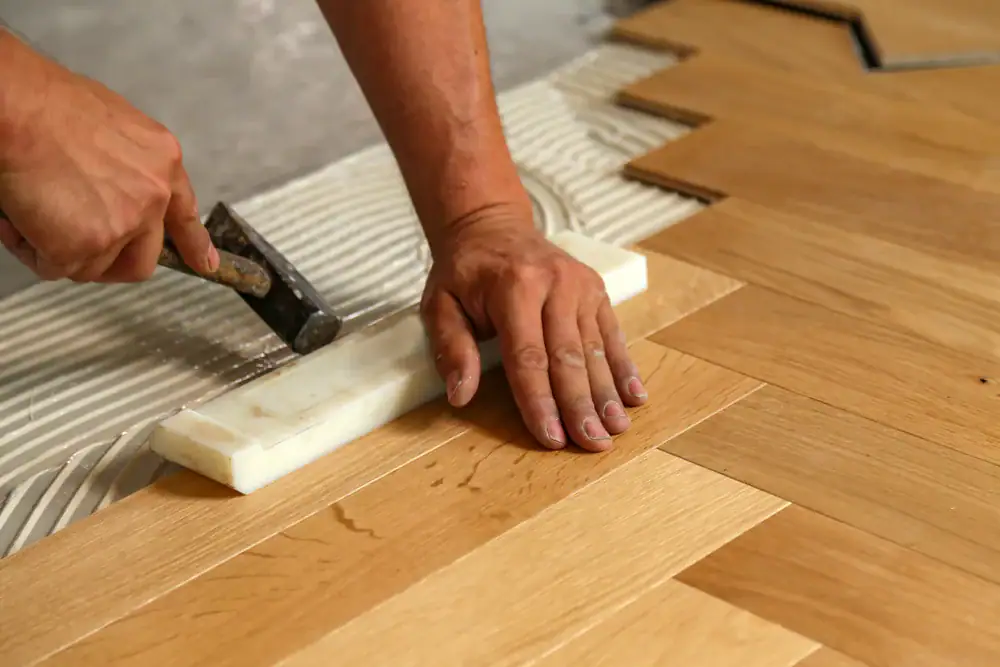
Your floors won’t buckle in July when the humidity hits 80%. They won’t separate at the seams come January. That’s what happens when you work with installers who understand North Carolina’s climate and prepare your subfloor correctly before anything goes down.
Most flooring problems aren’t about the product. They’re about shortcuts during installation—skipping moisture barriers, ignoring subfloor leveling, rushing acclimation time. You end up with beautiful floors that fail within two years.
Custom flooring installation in Asbury, NC means selecting materials engineered for our region’s temperature swings and humidity levels. It means proper prep work, not just slapping down planks and hoping for the best. When your installer has three decades of experience in this exact climate, you’re not gambling on whether your investment will hold up.
We’ve been installing flooring in Asbury, NC and throughout the Carolinas for over 30 years. We’ve seen every flooring trend come and go, every material innovation, every installation mistake that comes back to haunt homeowners three years later.
You’re not getting a crew that learned from YouTube videos. You’re getting professionals who’ve handled thousands of installations across North Carolina’s unique climate challenges—from coastal humidity to piedmont temperature swings.
We back every installation with a lifetime warranty because we know our work holds up. When 165,000 new residents moved to North Carolina last year, many learned the hard way that not all flooring companies understand what this climate demands. You don’t have to be one of them.
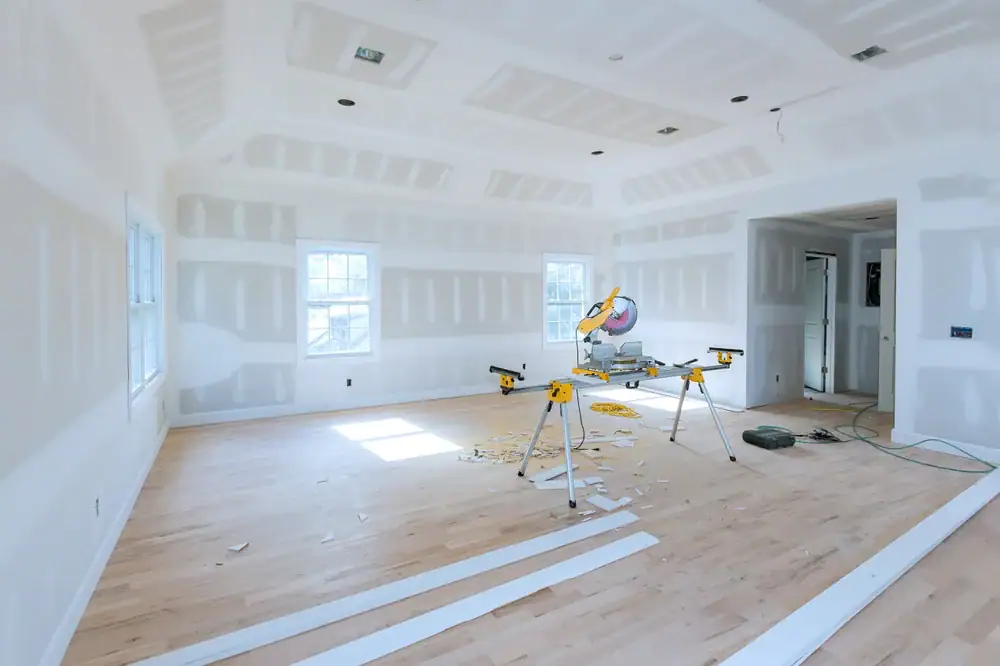
It starts with an in-home consultation where we look at your space, your subfloor condition, and your actual needs—not just what’s trendy. If you have pets, kids, or a crawlspace with moisture issues, that changes everything about what we recommend.
We measure moisture levels in your subfloor because North Carolina’s humidity will destroy beautiful hardwood if the foundation isn’t right. If your house has settled and created uneven floors, we address that before installation. This prep work is where most companies cut corners, and it’s why their floors fail.
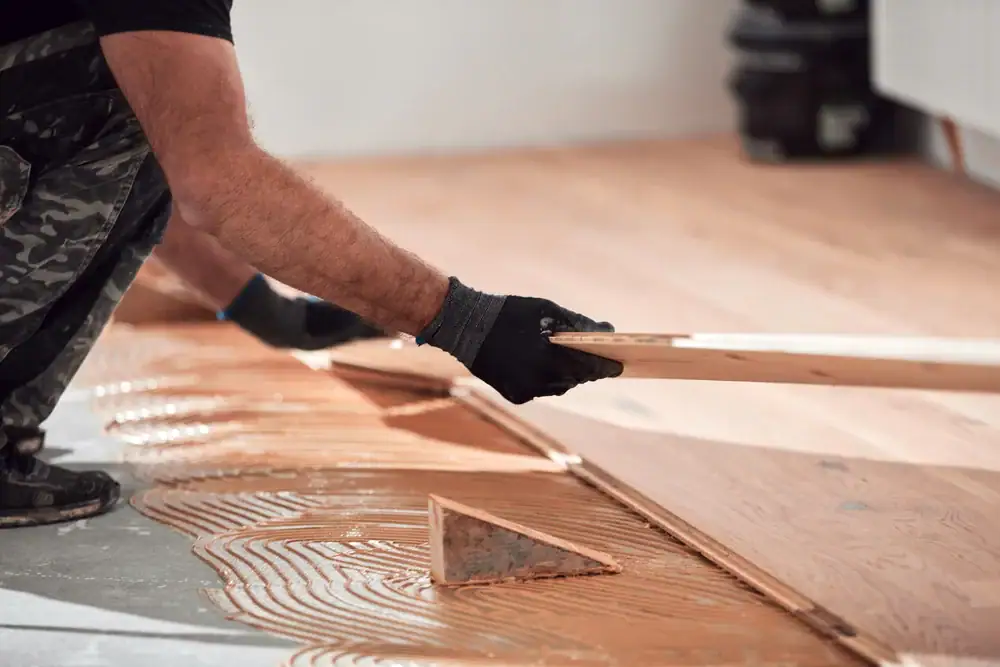
Once we’ve selected your flooring—whether that’s engineered hardwood, luxury vinyl, laminate flooring in Asbury, NC, or custom tiles—we let materials acclimate to your home’s environment. Rushing this step causes expansion and contraction problems later. Then we install with proper underlayment, moisture barriers where needed, and attention to your home’s specific conditions.
You get a walkthrough when we’re done, care instructions for your specific flooring type, and our lifetime installation warranty in writing.
Ready to get started?
Hardwood flooring in Asbury, NC works beautifully—if it’s engineered hardwood designed for humidity, not solid hardwood that’ll gap and warp. Vinyl flooring in Asbury, NC has come a long way from the linoleum your grandmother had. Today’s luxury vinyl mimics natural wood and stone while standing up to moisture, pets, and heavy traffic without the maintenance headaches.
Laminate flooring offers durability at a lower price point, perfect for families with kids who aren’t gentle on floors. Custom carpet works in bedrooms and living spaces where comfort matters more than waterproofing. Custom tiles shine in bathrooms, kitchens, and entryways where water exposure is inevitable.
We also handle complete remodeling projects—kitchens and bathrooms where flooring is just one piece of a larger renovation. When you’re already tearing things apart, it makes sense to work with one company that coordinates the whole project instead of juggling multiple contractors who blame each other when something goes wrong.
North Carolina’s housing market added 60,000 new units last year, and many of those homeowners are discovering that builder-grade flooring doesn’t hold up. Upgrading now means you’re not replacing cheap materials in five years.
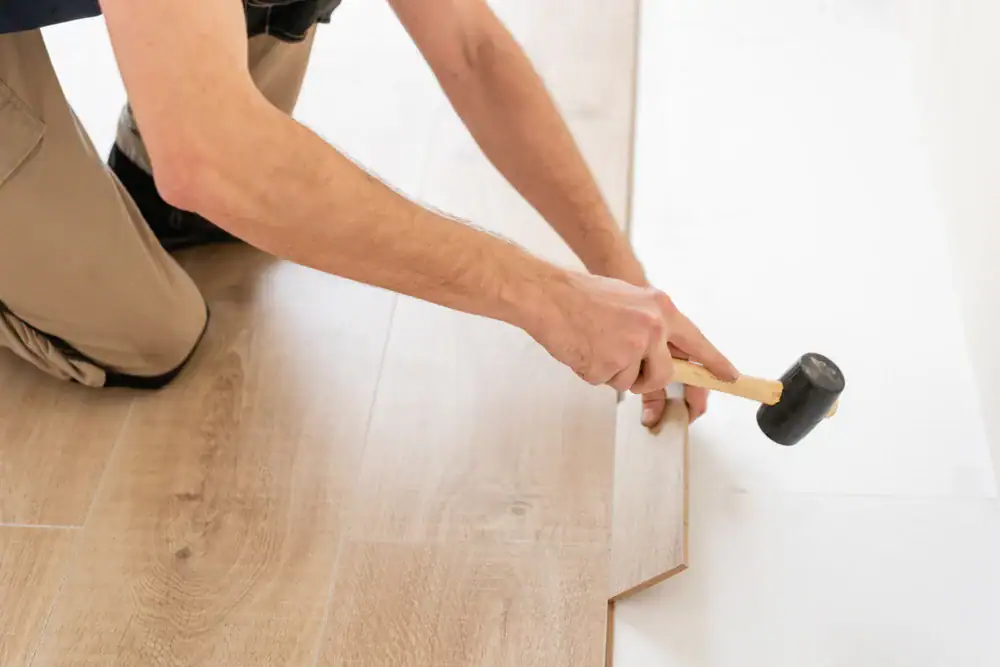
Engineered hardwood, luxury vinyl, and porcelain tile handle North Carolina’s humidity better than solid hardwood. Engineered hardwood has a layered construction that resists the expansion and contraction that destroys solid hardwood in our climate. The top layer gives you real wood appearance, but the core stays stable when humidity spikes in summer or drops in winter.
Luxury vinyl is completely waterproof, making it ideal for kitchens, bathrooms, basements, and homes with pets. It won’t warp if water sits on it, and it doesn’t need the refinishing that hardwood requires every few years. Porcelain tile is similarly moisture-resistant and works well in high-traffic areas or anywhere water exposure is a concern.
Solid hardwood can work in climate-controlled spaces if you’re committed to maintaining consistent humidity levels year-round. But most homes in Asbury, NC experience enough humidity fluctuation that engineered options make more sense. The key is proper installation with moisture barriers and subfloor prep—even the best materials fail without that foundation.
Most residential flooring projects take 2-5 days depending on square footage, material type, and subfloor condition. That includes prep work, installation, and cleanup. Hardwood floor installation in Asbury, NC requires 2-3 days of acclimation time before we even start, so the material adjusts to your home’s temperature and humidity.
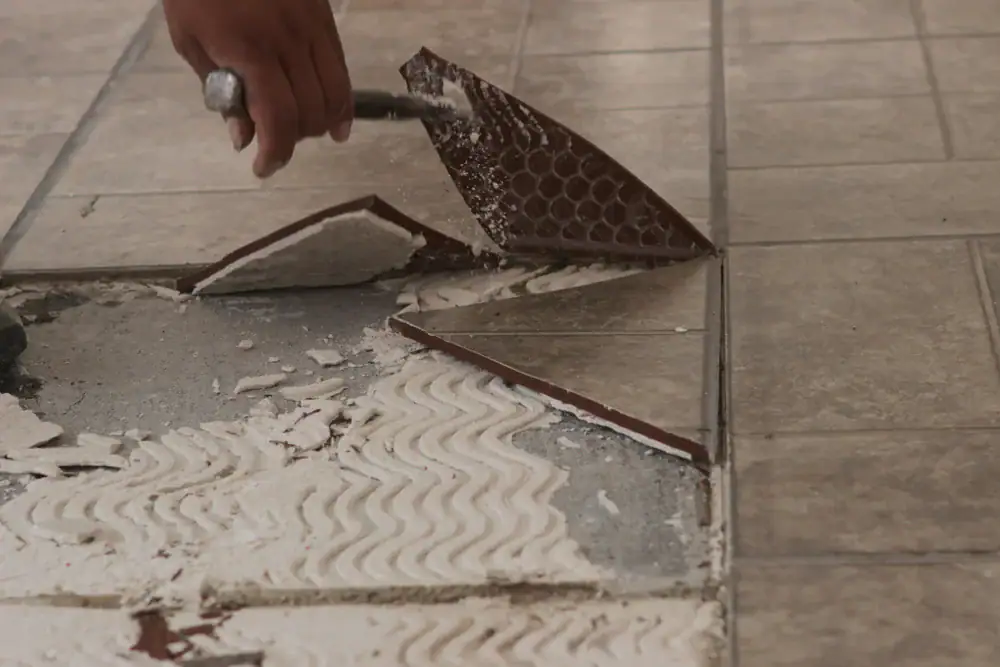
If your subfloor needs leveling or moisture remediation, add another day or two. Houses that have settled over time often have uneven floors that need correction before new flooring goes down. Skipping this step causes problems later—planks that don’t sit flush, gaps that appear over time, or tiles that crack because they’re not properly supported.
Larger projects or whole-home installations take longer, obviously. Kitchen and bathroom remodeling projects where we’re also handling cabinetry, tile work, and fixtures can take 1-2 weeks. We give you an accurate timeline upfront based on your specific project, not vague estimates that stretch into months.
Vinyl flooring in Asbury, NC typically runs $3-8 per square foot installed, depending on quality and style. Laminate flooring costs $4-10 per square foot. Engineered hardwood ranges from $8-15 per square foot. Custom tile work runs $10-20+ per square foot depending on material and pattern complexity.
Those ranges include installation, underlayment, and basic prep work. If your subfloor needs significant leveling, moisture barrier installation, or repairs, that’s additional. We don’t hide those costs—we identify them during the in-home consultation so you know exactly what you’re paying for and why.
The cheapest quote isn’t always the best value. Companies that underbid often cut corners on prep work, use lower-grade materials, or rush installation. You end up paying twice—once for the initial install, and again in two years when you’re replacing floors that failed prematurely. Our pricing reflects proper installation with materials designed for North Carolina’s climate, backed by a lifetime warranty on our work.
Yes. Every installation comes with our lifetime installation warranty covering workmanship and installation-related issues. If something fails because of how we installed it, we fix it. That’s separate from manufacturer warranties on the flooring materials themselves, which vary by product and brand.
Our warranty covers installation problems like planks separating, tiles cracking due to improper substrate prep, or adhesive failures. It doesn’t cover damage from flooding, furniture scratches, or normal wear and tear—those are maintenance issues, not installation defects. We’re clear about what’s covered so there’s no confusion if something happens down the road.
We’ve been doing this for 30+ years in the Carolinas. We’re not going anywhere, and we stand behind our work. Some companies offer warranties but disappear within a few years, leaving you with no recourse. We’re still here fixing installations we did a decade ago if something genuinely goes wrong, though that’s rare when the work is done right from the start.
Yes, but we address the moisture problem first. Installing flooring over a wet subfloor is asking for mold, warping, and material failure within months. North Carolina’s humidity means many homes have crawlspace moisture issues, especially older houses that weren’t built with proper vapor barriers.
We test subfloor moisture levels during the consultation. If readings are too high, we identify the source—poor crawlspace ventilation, plumbing leaks, groundwater intrusion, or inadequate moisture barriers. Sometimes it’s a simple fix like improving ventilation. Other times it requires vapor barrier installation or addressing drainage issues around your foundation.
Once moisture is controlled, we install appropriate underlayment and moisture barriers before your flooring goes down. This adds a day or two to the project and some cost, but it’s the difference between floors that last decades and floors that fail in two years. We won’t install over moisture problems and hope for the best—that’s not how you build a 30-year reputation.
Vinyl flooring is completely waterproof. Laminate flooring is water-resistant but will swell and buckle if water sits on it too long. That’s the main difference that matters for most homeowners in Asbury, NC, where humidity and occasional water exposure are facts of life.
Vinyl—especially luxury vinyl plank or tile—has a plastic core that won’t absorb moisture. You can install it in bathrooms, kitchens, basements, anywhere water might be an issue. Laminate has a wood-based core that resists moisture better than hardwood but isn’t truly waterproof. It works fine in living rooms, bedrooms, and dining areas where water exposure is minimal.
Both mimic the look of hardwood or tile convincingly. Vinyl tends to feel slightly softer underfoot. Laminate often has a more rigid feel closer to real hardwood. Price-wise, they’re comparable, with quality options in both categories ranging from budget-friendly to premium. Your decision should be based on where you’re installing it and how much water exposure that area gets, not just appearance or cost.
Other Services we provide in Asbury