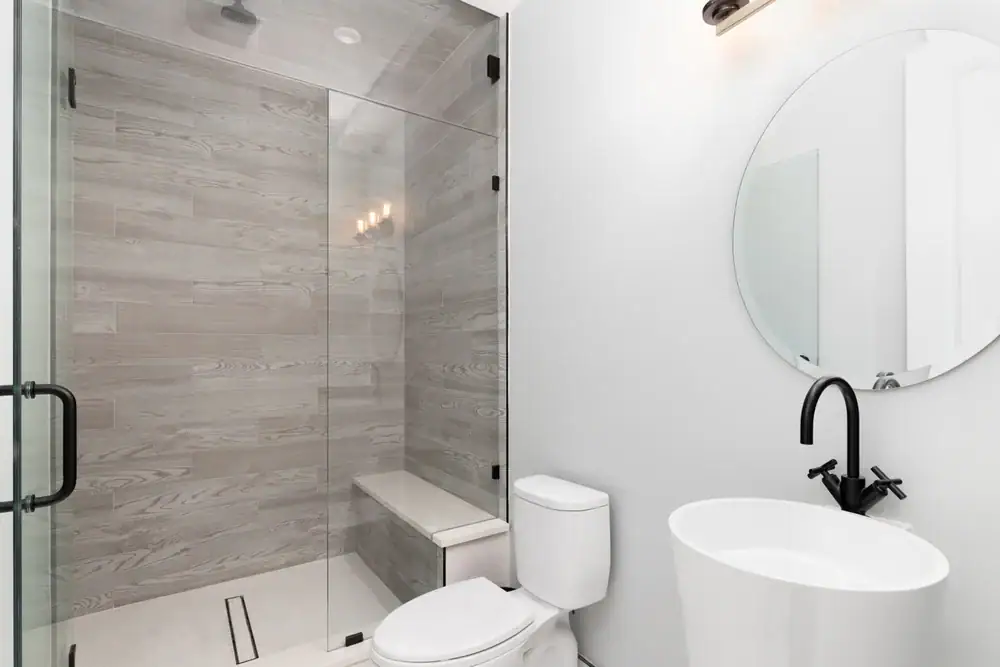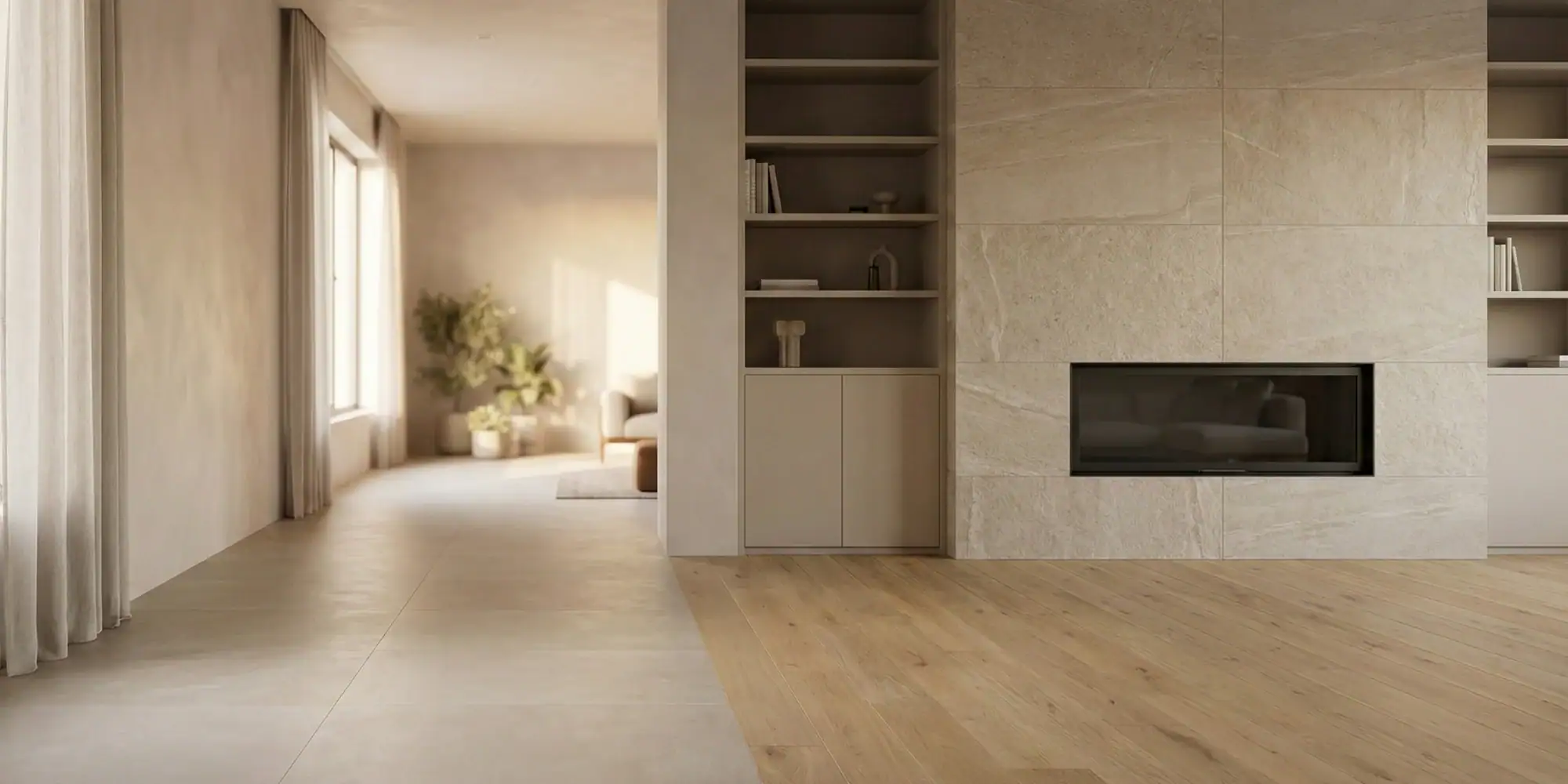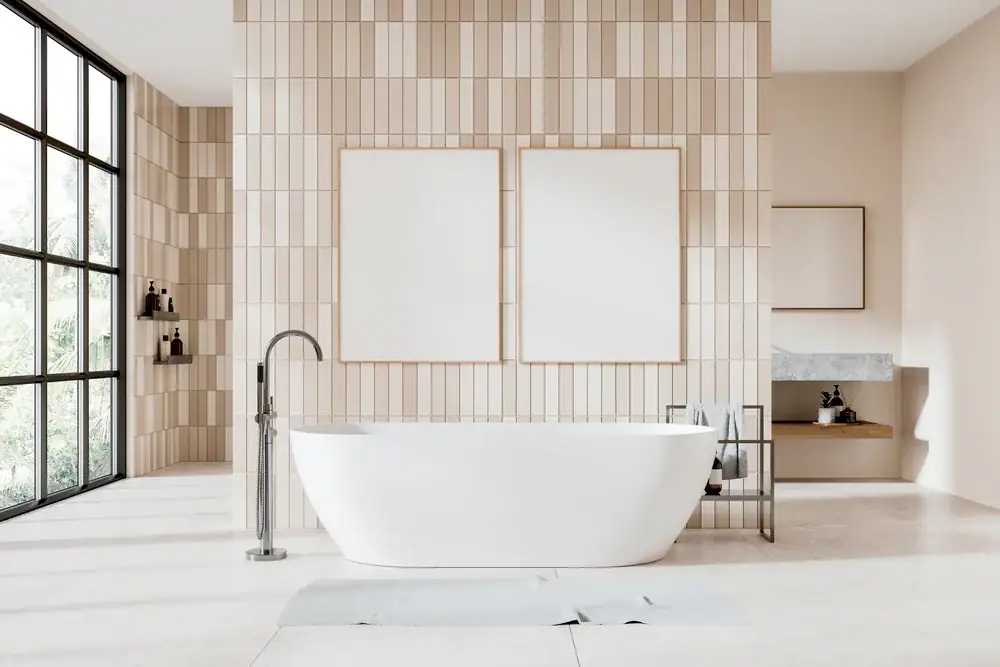
Choosing between marble and porcelain tile for your home? Discover the real differences in cost, durability, and maintenance to make the right decision for your space.
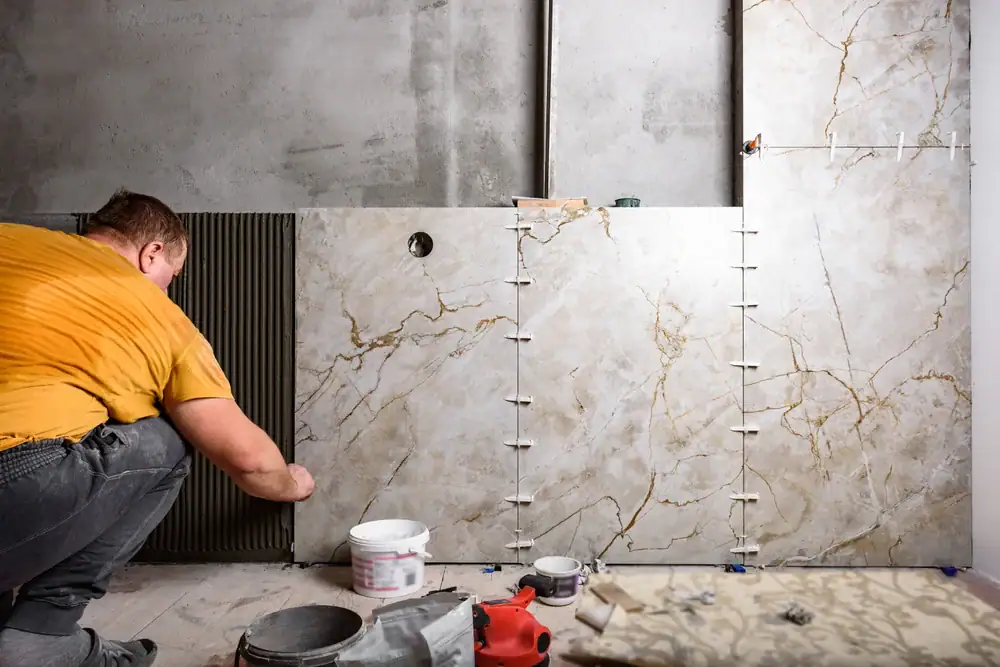
Marble is natural stone, quarried from the earth and cut into tiles. Each piece is unique, with veining and color variations that can’t be replicated. It’s been a symbol of luxury for centuries, and there’s a reason—it’s genuinely beautiful. Whether you’re considering it for custom tiles in a bathroom or a statement entryway, marble brings authentic elegance.
Porcelain tile is man-made. It’s crafted from refined clay fired at extremely high temperatures, often exceeding 2,500 degrees Fahrenheit. This process creates a dense, hard material that’s less porous than ceramic and far more durable than you might expect. Modern porcelain can even replicate the look of marble, wood, or natural stone.
Here’s what matters for homeowners in Wake County, NC and Horry County, SC: marble is porous, which means it absorbs liquids and requires regular sealing to prevent stains. Porcelain is non-porous, making it naturally water-resistant and far more forgiving when life happens. That fundamental difference drives almost every other consideration.
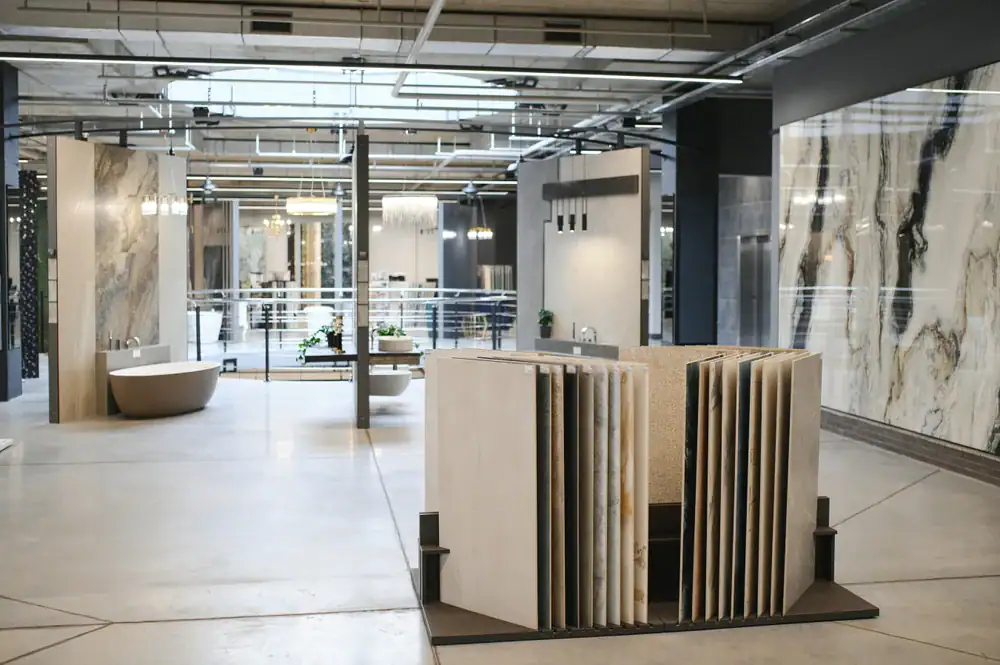
Marble delivers that high-end look instantly. The natural veining, the cool smoothness, the way light plays across the surface—it’s the real deal, and people notice. If you’re aiming for elegance and you’re willing to care for it properly, marble can be stunning in the right space. It’s a popular choice for custom tile designs in upscale bathrooms and statement floors.
But let’s talk about what marble demands. It’s porous, so spills need to be wiped up immediately—especially anything acidic like wine, coffee, or citrus. Those substances can etch the surface, leaving dull spots that won’t buff out. You’ll need to seal marble regularly, typically once or twice a year depending on use, and that’s an ongoing cost and commitment.
Marble is also softer than porcelain, rating between 3 and 5 on the Mohs hardness scale. That means it scratches more easily. Drop something heavy, and you might chip it. High-traffic areas will show wear over time. If you have kids, pets, or a busy household, marble in an entryway or kitchen might not age gracefully.
Cost is another factor. Marble tile typically runs $5 to $15 per square foot for materials alone, and installation can add another $4 to $9 per square foot. You’re looking at $20 to $35 per square foot installed, and that doesn’t include the ongoing maintenance. It’s an investment that requires commitment.
On the upside, marble can increase your home’s resale value. Buyers recognize quality natural stone, and in the right spaces—like a primary bathroom or a statement foyer—it can be a selling point. With proper care, marble can last 25 to 50 years or more.
The bottom line: marble is for homeowners who love the authentic look of natural stone and are prepared to maintain it. It’s not a set-it-and-forget-it material. If you’re not ready to seal, clean carefully, and accept some patina over time, porcelain might serve you better.
Porcelain doesn’t get the same romantic reputation as marble, but it’s quietly dominating bathrooms, kitchens, and entryways across Wake County, NC and Horry County, SC for good reason. It’s tough, low-maintenance, and versatile enough to mimic just about any look you want—including marble. For homeowners seeking custom tiles with a specific aesthetic, porcelain offers nearly unlimited design flexibility.
Let’s start with durability. Porcelain is fired at such high temperatures that it becomes incredibly dense and hard, rating 7 to 8 on the Mohs scale. That makes it highly resistant to scratches, stains, and moisture. Spill your coffee? Wipe it up whenever. Forget to seal it? You don’t have to—porcelain doesn’t need sealing at all.
It’s also water-resistant by nature, which makes it ideal for bathrooms, kitchens, laundry rooms, and any space where moisture is a concern. In humid climates like ours here in North Carolina and South Carolina, that’s a major advantage. Marble can absorb moisture over time, leading to dullness or even warping. Porcelain won’t.
Here’s where porcelain really shines: it can look like almost anything. Modern manufacturing techniques allow porcelain to replicate the veining and texture of marble, the grain of wood, even the look of concrete or slate. If you want the marble aesthetic without the marble headaches, high-quality marble-look porcelain is a smart compromise. Many Raleigh and Myrtle Beach homeowners are choosing this option for tile installation in bathrooms and kitchens.
Cost-wise, porcelain is more accessible. Materials typically run $3 to $7 per square foot, with total installation costs ranging from $8 to $18 per square foot. That’s significantly less than marble, and you’re not paying for ongoing sealing or professional polishing down the road.
Porcelain also lasts. With proper installation, you can expect 50 to 60 years of service, often outlasting marble in high-use areas. It’s a long-term investment that doesn’t demand constant attention.
The trade-offs? Porcelain can be brittle despite its hardness. If you drop something very heavy, it might crack. And while it’s durable, it won’t add the same resale cachet as genuine marble. Buyers know the difference, even if the look is convincing.
Installation can also be tricky. Porcelain is harder to cut than ceramic, and it requires a skilled installer to handle properly. But once it’s down, you’re done worrying about it.
For most homeowners—especially those with kids, pets, or busy schedules—porcelain offers the best balance of beauty, performance, and practicality. It’s the tile that works with your life, not against it.
Want live answers?
Connect with a American Dream Floor expert for fast, friendly support.
Let’s talk numbers, because cost is usually where the decision gets real. Marble sounds luxurious until you see the invoice. Porcelain sounds practical until you realize quality options aren’t exactly cheap either.
Here’s the breakdown. Marble tile materials range from $5 to $15 per square foot depending on the type and origin. Installation adds another $4 to $9 per square foot, bringing your total to roughly $20 to $35 per square foot installed. And don’t forget you’ll need to budget for sealing—initially and then once or twice a year after that.
Porcelain is more budget-friendly upfront. Materials cost $3 to $7 per square foot, and installation typically runs $5 to $10 per square foot. Total installed cost: $8 to $18 per square foot. No sealing required, so your maintenance costs stay low over time.
But here’s the thing—cost isn’t just about the price tag. It’s about what you get for your money and what you’ll spend later. Marble might cost more now, but if it increases your home’s value and you’re committed to maintaining it, that investment can pay off. Porcelain costs less upfront and almost nothing to maintain, which makes it a better long-term value for most people.
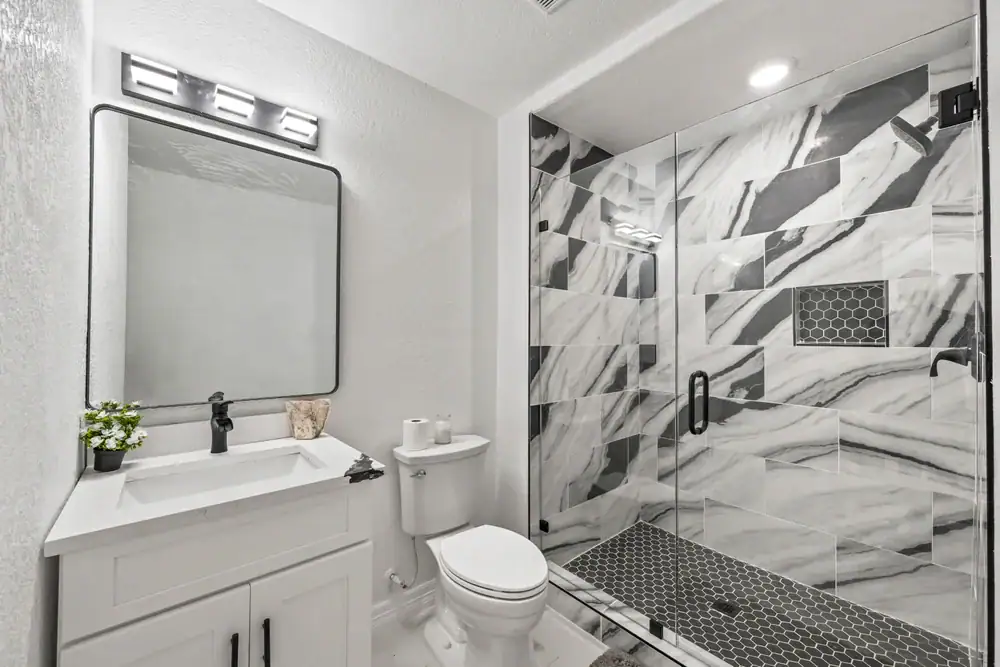
Bathrooms are where tile decisions get tested every single day. Moisture, humidity, foot traffic, dropped shampoo bottles—your bathroom floor has to handle it all. So which tile wins for bathroom flooring in homes across Wake County and Horry County?
For most bathrooms, porcelain is the smarter choice. It’s water-resistant, slip-resistant (especially with textured finishes), and doesn’t require sealing. In humid climates like ours in North Carolina and South Carolina, that’s critical. Marble can absorb moisture over time, which can lead to dulling, staining, or even mildew in grout lines if not maintained religiously.
Porcelain also handles the daily abuse better. Kids running in and out of the shower, hairspray overspray, toothpaste splatters—porcelain shrugs it all off. Marble? You’re wiping up every spill immediately and resealing regularly to keep it looking good.
That said, if you’re designing a primary bathroom that’s more spa than utility, and you’re committed to the upkeep, marble can create a truly luxurious space. Honed marble (matte finish) is less slippery than polished and hides wear a bit better, making it a better option than high-gloss if you’re set on natural stone.
But here’s the honest truth: most homeowners who choose marble for bathroom floors either regret it or hire someone to maintain it. Porcelain gives you 95% of the beauty with none of the stress.
If you want the marble look without the marble maintenance, high-quality marble-look porcelain tile is your best bet for bathroom tile installation. Modern options are so convincing that most guests won’t know the difference—and you’ll sleep better knowing your floor can handle whatever your morning routine throws at it. This is especially true for busy households in Raleigh, Myrtle Beach, and surrounding areas where practicality matters as much as style.
Let’s get practical. You’re not choosing tile for a museum. You’re choosing it for a home where people live, spill things, and forget to take their shoes off. Durability and maintenance aren’t just specs on a chart—they’re your daily reality. This is especially important when comparing stone tile options for high-traffic areas.
Marble requires active maintenance. You’ll need to seal it when it’s installed, then reseal it once or twice a year depending on traffic. That’s not a quick wipe-down—it’s a process. You’ll also need to clean up spills immediately, avoid acidic cleaners, and accept that over time, marble develops a patina. Some people love that lived-in look. Others find it frustrating.
Scratches and etching are real concerns. If you drag furniture, drop keys, or let your dog’s nails click across the floor, you’ll see marks. Polished marble also gets slippery when wet, which is a safety issue in bathrooms.
Porcelain, on the other hand, is almost maintenance-free. Sweep it, mop it with regular cleaner, and you’re done. No sealing, no special products, no worrying about what you spilled or how long it sat there. It’s stain-resistant, scratch-resistant, and holds up to heavy foot traffic without showing wear.
The trade-off is that while porcelain is hard, it’s also brittle. Drop a cast-iron skillet on it, and you might crack a tile. But in normal use—even in busy households—porcelain is incredibly forgiving.
Here’s the question to ask yourself: do you want tile that requires attention, or tile that you can forget about? If you’re the type who enjoys caring for your home’s finishes and sees maintenance as part of the experience, marble might appeal to you. If you’d rather spend your weekends doing anything other than sealing floors, porcelain is the clear winner.
For homeowners in humid climates like ours in North Carolina and South Carolina, porcelain’s moisture resistance is a game-changer. Marble in a humid environment needs even more vigilant care to prevent moisture absorption and mildew. Porcelain doesn’t care how humid it gets. That’s why we often recommend porcelain for coastal and southern homes in Wake County and Horry County.
There’s no universal right answer here, because the best tile for your home depends on how you actually live in it. Marble is stunning, authentic, and timeless—if you’re ready to care for it and you’re using it in the right spaces. Porcelain is durable, practical, and versatile—if you want performance and low maintenance without sacrificing style. Both work beautifully as custom tiles when installed correctly.
If you’re still unsure which direction to go, that’s exactly why we’re here at American Dream Flooring And Tile. With over 30 years of experience installing both marble and porcelain tile across Wake County, NC and Horry County, SC, we’ve seen what works in real homes, not just showrooms. We’ll walk you through samples, answer your questions honestly, and help you choose the tile that fits your lifestyle and your budget.
You’re not just picking tile. You’re making a decision you’ll live with every day for decades. Make it count.
Summary:
Share: