Planning a kitchen remodel in Wake County or Horry County? This guide walks you through choosing cabinets, flooring, and tile that'll work hard and look good for decades.
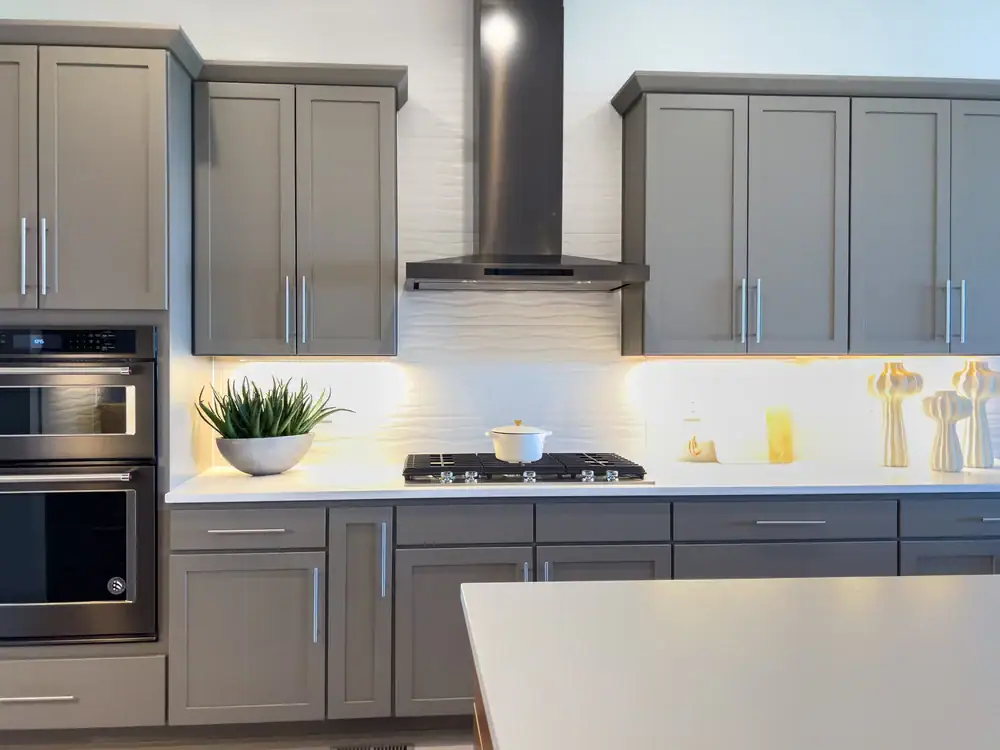
Cabinets set the tone for everything else in your kitchen. They’re also the single biggest line item in most remodels, which is why getting them right matters more than getting them trendy.
You’ve got three main types to choose from: stock, semi-custom, and custom. Stock cabinets come pre-made in standard sizes—you can take them home the same day, and they’re budget-friendly. Semi-custom gives you more flexibility with sizing and finishes. Custom means you’re building exactly what you want, but you’re paying for it.
The real question isn’t which type you buy. It’s whether the cabinets you’re considering will still be standing strong in 15 years. That comes down to construction, not style.
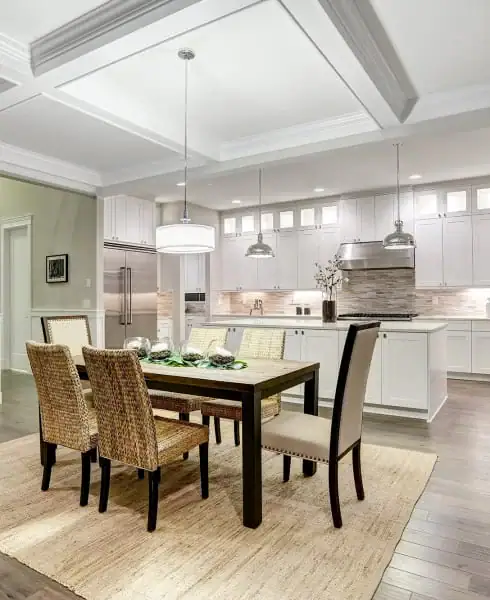
Walk into any showroom and the cabinets all look pretty similar. That’s the point. The difference is in what you can’t see—the box, the shelves, the joints, the hardware.
Start with the cabinet box. Plywood is the gold standard. It’s strong, it doesn’t warp with humidity changes, and it holds screws better than particleboard or MDF. If someone’s trying to sell you particleboard cabinets, they’re either trying to save you money or they’re hoping you don’t know better. Particleboard swells when it gets wet, and kitchens get wet.
Check the thickness. Cabinet sides should be at least half an inch thick for framed cabinets, three-quarters of an inch for frameless European-style cabinets. Shelves should be three-quarter-inch plywood minimum. Anything thinner will sag once you load it up with dishes and canned goods.
Now look at the drawers. Dovetail joints are a sign of quality—they’ve been used for centuries because they hold up under stress. If the drawers are held together with staples or cheap dowels, keep walking. You want full-extension drawer glides, preferably soft-close. Blum is the industry standard, though other brands come close.
Open and close a few doors and drawers. Do they feel solid? Do they align properly? A cabinet that doesn’t close right in the showroom isn’t going to magically fix itself in your kitchen.
One more thing: don’t get distracted by fancy finishes if the bones aren’t there. A gorgeous painted cabinet with particleboard shelves is still a particleboard cabinet. You’re better off with a simpler style built right than a trendy style built cheap.
Trends come and go, but some cabinet styles have been around long enough to prove they’re not going anywhere. Shaker cabinets—clean lines, square corners, flat panels—work in almost any kitchen. They’re not boring. They’re adaptable.
White cabinets remain popular for a reason. They brighten up a space, they pair well with almost any countertop or backsplash, and they don’t scream “2019 renovation” the way certain gray tones might. If white feels too stark, consider warm neutrals, soft greiges, or natural wood tones. Honey oak and walnut are making a comeback, and they bring warmth that painted cabinets can’t match.
Finish matters as much as color. Satin finishes hide fingerprints better than matte. High-gloss looks sleek but shows every smudge and requires constant wiping down. If you’ve got kids or you’re not interested in wiping down cabinets daily, go with satin.
Think about your countertops and flooring when you’re choosing cabinet color. You want contrast, not competition. If you’re going with a bold countertop—marble with heavy veining, dark granite, colorful quartz—keep your cabinets neutral. Let one element be the star. If your cabinets are the statement piece, keep everything else quieter.
And here’s something most people don’t consider until it’s too late: how easy are these cabinets to clean? Cabinets with deep crevices, raised panels, and decorative trim collect grease and dust. Flat-panel cabinets wipe down in seconds. If you cook a lot—especially if you fry or sauté often—you’ll appreciate the simplicity.
One last note on cabinet hardware. Pulls and knobs seem like a small detail, but they’re one of the easiest ways to update your kitchen down the road. Choose a classic style now, and you can swap them out in ten years if you want a refresh without the full remodel.
Want live answers?
Connect with a American Dream Floor expert for fast, friendly support.
Your kitchen floor takes more abuse than any other surface in your home. Spills, dropped dishes, foot traffic, chair scrapes, dog nails—it all happens here. The flooring you choose needs to handle it without looking like a disaster zone in three years.
Right now, three options dominate kitchen remodeling projects in Wake County, NC and Horry County, SC: luxury vinyl plank, hardwood, and tile. Each has strengths. Each has trade-offs. The right choice depends on how you actually use your kitchen, not just how you want it to look.

Luxury vinyl plank—LVP—has come a long way from the vinyl flooring your grandmother had. Modern LVP looks like real wood, feels warmer underfoot than tile, and handles water better than actual hardwood. That last part matters in a kitchen.
LVP is 100% waterproof in most cases. Spill a glass of water, let the dog’s bowl overflow, deal with a dishwasher leak—it doesn’t matter. The floor won’t warp, buckle, or stain. You just wipe it up and move on with your day.
It’s also scratch-resistant, especially if you choose a thicker wear layer. Families with pets and kids appreciate this. So do people who don’t want to tiptoe around their own kitchen worrying about every dropped fork.
Maintenance is simple. Sweep or vacuum regularly. Mop when it needs it. That’s it. No special cleaners, no refinishing, no sealing. For people who’d rather spend time cooking than maintaining their floors, LVP makes sense.
The cost is reasonable too—typically $1.50 to $12 per square foot installed, which is less than hardwood and often less than tile. If your budget is tight but you still want a kitchen that looks put-together, LVP delivers.
Here’s the catch: LVP doesn’t have the same resale appeal as hardwood. Some buyers see vinyl and assume it’s a budget choice, even when it’s a quality product. If you’re remodeling to sell in the next few years, keep that in mind. But if you’re remodeling for yourself and you plan to stay a while, LVP is one of the smartest choices you can make.
One more thing: installation matters. LVP is a floating floor, which means it shouldn’t be installed under cabinets. Cabinets go in first, then the flooring. We’ll talk more about installation order in a minute, but this is important—get it backwards and you’ll have problems down the road.
Hardwood brings warmth and character that’s hard to replicate. It’s the top choice for homeowners who want a kitchen that feels high-end and timeless. Oak and maple are popular—they’re durable, they show off natural grain, and they pair well with almost any cabinet style.
The downside? Hardwood doesn’t love water. Spills need to be cleaned up right away, or you risk staining and warping. If you’re the type who’s constantly juggling three things while cooking and might not notice a spill for an hour, hardwood could stress you out. But if you’re diligent about cleanup and you want flooring that can be refinished and refreshed decades from now, hardwood is worth considering.
Here’s a pro tip: if you’re set on hardwood but worried about moisture, look at engineered hardwood instead of solid. It’s more stable in humid environments and still gives you that real wood look.
Now let’s talk tile. Porcelain and ceramic tile are incredibly durable. They resist scratches, stains, heat, and water. Drop a cast iron skillet on tile and the skillet loses. Tile also works beautifully with underfloor heating, which is a nice bonus if you’re in a climate where cold floors are an issue.
Tile comes in every size, color, and finish you can imagine. Large-format tiles—12×24 inches or bigger—are trending right now because they create a cleaner, more seamless look with fewer grout lines. Matte finishes are replacing high-gloss because they hide water spots and scratches better.
The trade-off with tile is comfort. It’s hard underfoot, and it’s cold unless you’ve got radiant heat underneath. If you spend a lot of time standing in the kitchen, tile can be tough on your feet and back. Some people solve this with a cushioned mat near the sink and stove. Others just accept it as part of the package.
Grout is another consideration. Light-colored grout shows dirt. Dark grout hides it but can look heavy depending on your tile choice. Matching your grout color closely to your tile creates a more cohesive, less busy look—and that’s the direction design is heading in 2026.
So which one should you choose? If you want the warmth and resale value of wood, go with hardwood or engineered hardwood. If you want bulletproof durability and you’re okay with a harder surface, go with tile. If you want the look of wood with better water resistance and lower maintenance, LVP splits the difference.
Kitchen remodeling comes down to three big decisions: cabinets that won’t fall apart, flooring that can handle real life, and tile that ties it all together. Get those right, and you’ve built a kitchen you’ll actually want to use for the next 20 years.
Start with a plan. Know your budget before you fall in love with marble countertops. Measure twice. Think about how you cook, how you move through the space, and what drives you crazy about your current kitchen. Then build around that.
Don’t rush it. The homeowners who regret their remodels are usually the ones who made decisions under pressure or skipped steps to save time. The ones who love their kitchens? They took their time, asked questions, and worked with people who knew what they were doing.
If you’re in Wake County, NC or Horry County, SC and you’re ready to start, we can walk you through the process. With over 25 years of experience in flooring and kitchen remodeling, we’ve seen what works and what doesn’t—and we’ll tell you the truth, even when it’s not what you want to hear.
Summary:
Article details:
Share: