Tile Flooring Wake County, NC & Horry County, SC

Floors Built to Last, Installed Right

You need tile flooring that stands up to real life without cracking, shifting, or creating problems down the road. We deliver professional installation with proper prep work, quality materials, and a lifetime warranty in Wake County, NC and Horry County, SC.

Over 30 Years Experience

Lifetime Installation Warranty

Transparent Pricing Always

Local Showrooms You Can Visit

Professional Tile Installation Services in Wake County, NC & Horry County, SC

Tile That Handles Carolina Living

Tile flooring works in Carolina homes because it handles what other materials can’t. High humidity, temperature swings, wet bathrooms, busy kitchens, sandy entryways, and heavy foot traffic all demand flooring that won’t warp, stain, or fall apart. Ceramic tile, porcelain tile, luxury vinyl tile, and natural stone options give you durability that lasts decades when installed correctly. The difference between tile that performs and tile that fails comes down to installation quality. Proper subfloor preparation, correct adhesive application, moisture barriers where needed, and precise cutting around fixtures prevent the cracking, loose tiles, and grout problems that plague poorly installed floors. You’re not just buying tile. You’re investing in professional installation that protects your home and your budget.

Tile Flooring Options and Materials

Choosing the Right Tile Matters

Ceramic tile gives you affordability and versatility with countless colors, patterns, and finishes that work in any room. It handles daily wear well and costs less than premium options, making it smart for budget-conscious projects. Porcelain tile takes durability further with denser material that resists moisture, stains, and heavy use better than ceramic. It costs more, but the extra toughness pays off in bathrooms, kitchens, and high-traffic areas where flooring takes a beating. Luxury vinyl tile mimics the look of ceramic or stone while offering softer feel underfoot and easier installation. It’s waterproof, comfortable, and budget-friendly, though it won’t last as long as real tile. Natural stone and terrazzo tiles deliver unique, high-end aesthetics that can’t be replicated, but they require sealing and more maintenance. The right choice depends on your room, your budget, and how much wear the floor will see. We help you match materials to your actual needs instead of just selling you the most expensive option.

Why Choose Tile for Your Home

What You Actually Get

Beyond looking good, properly installed tile flooring solves real problems and makes your daily life easier without the maintenance headaches other flooring creates.

Bathroom and Kitchen Tile Installation

Installation That Prevents Future Problems

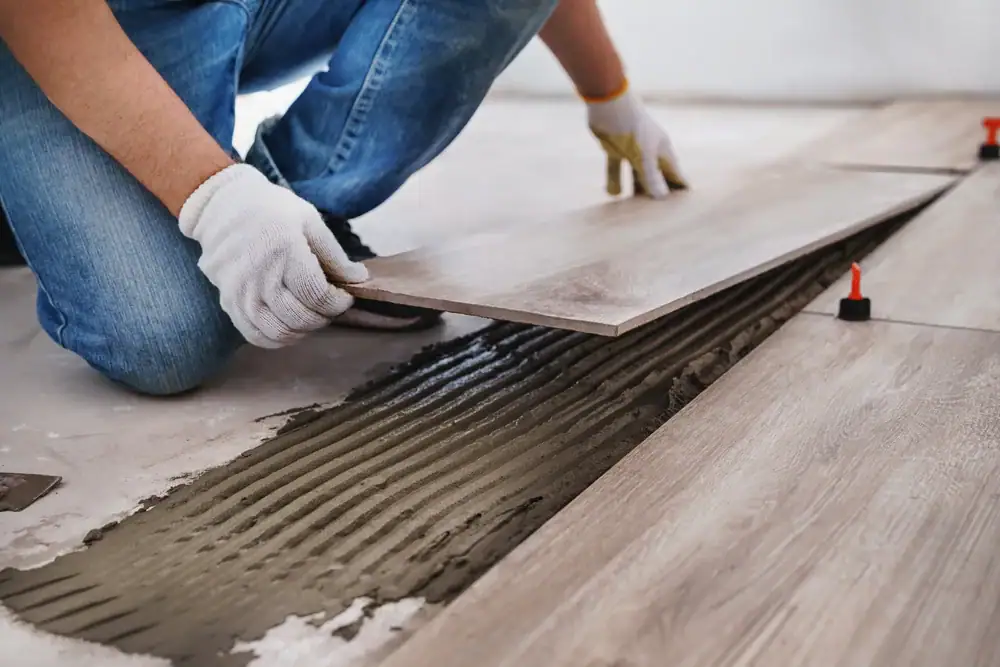
Bathroom tiling and kitchen floor tiles face constant moisture, temperature changes, and heavy use. That’s exactly why installation quality matters more than the tile itself. Proper subfloor assessment catches issues before they cause problems. Moisture barriers and waterproof membranes protect against water damage that ruins floors from underneath. Correct adhesive application and curing time prevent tiles from popping loose or cracking months later. The process includes removing old flooring when necessary, leveling uneven subfloors, installing cement backer board in wet areas, precise cutting around fixtures and edges, and proper grouting with stain-resistant materials. Corners get cut when installers rush or lack experience. You end up with grout that stains permanently, tiles that crack from improper support, or water damage that doesn’t show up until it’s expensive to fix. Our lifetime installation warranty backs up the work because we know proper technique prevents callbacks and unhappy customers.
Let’s Build Something You’ll Love

Tell us about your space and your goals, and we’ll help you turn your ideas into a finished result that fits your home.

Common questions about Tile Flooring

Tile flooring installation typically costs between $12 and $50 per square foot including materials and labor, though the exact price depends on the tile type you choose, the size of your project, and the condition of your existing subfloor. Ceramic tile generally runs $12 to $40 per square foot installed, while porcelain tile costs $15 to $50 per square foot. Luxury vinyl tile tends to be more budget-friendly at $4 to $16 per square foot installed. Additional costs can include removing old flooring, repairing or leveling subfloors, and adding moisture barriers in bathrooms or basements. We provide transparent estimates that include all necessary prep work and materials, so you won’t face surprise charges. Our best price guarantee means you’re getting competitive pricing without sacrificing installation quality that protects your investment long-term.
Porcelain tile is denser, harder, and more water-resistant than ceramic tile because it’s fired at higher temperatures with finer clay. This makes porcelain better for high-moisture areas like bathrooms and high-traffic spaces like kitchens where durability matters most. Porcelain resists stains, scratches, and water absorption better than ceramic, and it can even be used outdoors in some applications. Ceramic tile costs less and offers more design variety, making it a smart choice for areas that don’t face extreme conditions. Both materials last decades when installed properly, but porcelain’s extra toughness justifies the higher price in spaces that take a beating. The choice often comes down to your budget and how much wear the floor will see. For busy family kitchens and master bathrooms, porcelain delivers better long-term performance. For guest bathrooms or lower-traffic areas, ceramic offers great value without compromising quality.
Properly installed and maintained tile floors can last 20 to 40 years or more, significantly outlasting most other flooring materials. Ceramic and porcelain tile are exceptionally durable and won’t wear out from foot traffic, fade from sunlight, or deteriorate from normal use. Luxury vinyl tile typically lasts 10 to 20 years depending on quality and traffic levels. By comparison, carpet usually needs replacement every 5 to 15 years, and even hardwood floors require refinishing multiple times over their lifespan. The key to tile longevity is professional installation with proper subfloor preparation, correct adhesive application, and quality grout. Poorly installed tile can crack, shift, or develop problems within just a few years regardless of material quality. That’s why we back our installation work with a lifetime warranty. Regular maintenance for tile is minimal – just sweep regularly and mop with appropriate cleaners. Grout may need resealing every few years in high-moisture areas, but the tile itself requires virtually no upkeep.
Sometimes tile can be installed over existing flooring, but it depends on what’s currently there and its condition. Installing tile over old vinyl or linoleum is possible if the surface is completely level, firmly attached, and in good condition, though many professionals recommend removal to ensure proper adhesion. Installing tile over existing tile can work if the old tile is solid and level, but the added height may create issues with door clearances and transitions to other rooms. You cannot install tile over carpet, and installing over hardwood is generally not recommended. The bigger concern is what’s underneath. If the subfloor is damaged, uneven, or not properly supported, tile will crack and fail regardless of what’s on top. We assess the existing floor and subfloor condition to determine the best approach. Sometimes removal adds cost upfront but prevents expensive problems later. We evaluate your specific situation during the in-home consultation and recommend the approach that ensures long-lasting results rather than taking shortcuts that cause future headaches.
Luxury vinyl tile offers different benefits than ceramic or porcelain, but it’s not necessarily better or worse – it depends on your priorities. LVT costs less, feels softer and warmer underfoot, installs faster, and handles minor subfloor imperfections better than ceramic or porcelain. It’s completely waterproof and works well in basements and areas where real tile might be overkill. However, luxury vinyl tile doesn’t last as long as ceramic or porcelain, typically 10 to 20 years versus 20 to 40+ years for real tile. It can scratch, dent, or tear from sharp objects or heavy furniture, and it may fade or discolor from prolonged sun exposure. LVT also has lower resale value appeal compared to real tile, which homebuyers recognize as a premium, permanent flooring choice. For high-moisture bathrooms, busy kitchens, and areas where you want maximum durability and long-term value, ceramic or porcelain tile performs better. For budget-conscious projects, spaces where comfort matters, or temporary solutions, luxury vinyl tile makes sense. The right choice depends on how long you plan to stay in your home and what matters most to you.

Tile flooring maintenance is straightforward – sweep or vacuum regularly to remove dirt and debris, then mop with warm water and a pH-neutral tile cleaner. Avoid harsh chemicals, vinegar, or abrasive cleaners that can damage grout or dull the tile finish. For ceramic and porcelain tile, that’s really all you need for daily care. Grout requires more attention because it’s porous and can absorb stains if not sealed properly. Using stain-resistant grout during installation helps significantly. Sealing grout lines every one to three years in high-moisture areas like bathrooms prevents water penetration and staining. If grout does stain, a mixture of baking soda and water scrubbed with a brush often removes discoloration. For stubborn stains, oxygen bleach cleaners work without damaging grout like chlorine bleach can. Wipe up spills quickly, especially in kitchens where oils and acids can penetrate unsealed grout. Using rugs or mats in entryways catches dirt before it gets tracked across tile floors. The good news is tile itself is incredibly low-maintenance compared to carpet, hardwood, or other flooring that requires special treatments, refinishing, or frequent deep cleaning.
Need more information?