Your powder room doesn't have to feel cramped or outdated. Learn how smart remodeling choices turn small half-baths into impressive spaces that add real value to your home.
A powder room is a half-bath stripped down to the essentials: toilet, sink, done. No shower, no tub, no need for the storage that full bathrooms demand. Most powder rooms measure between 18 and 32 square feet—tight, but totally workable with the right approach.
Location matters. These spaces typically sit near your main living areas, close to the kitchen or entryway, which means guests use them more than anyone in your household. That makes them prime territory for first impressions. It also means this is where you can take design risks that would feel too bold in your master bathroom remodeling project.
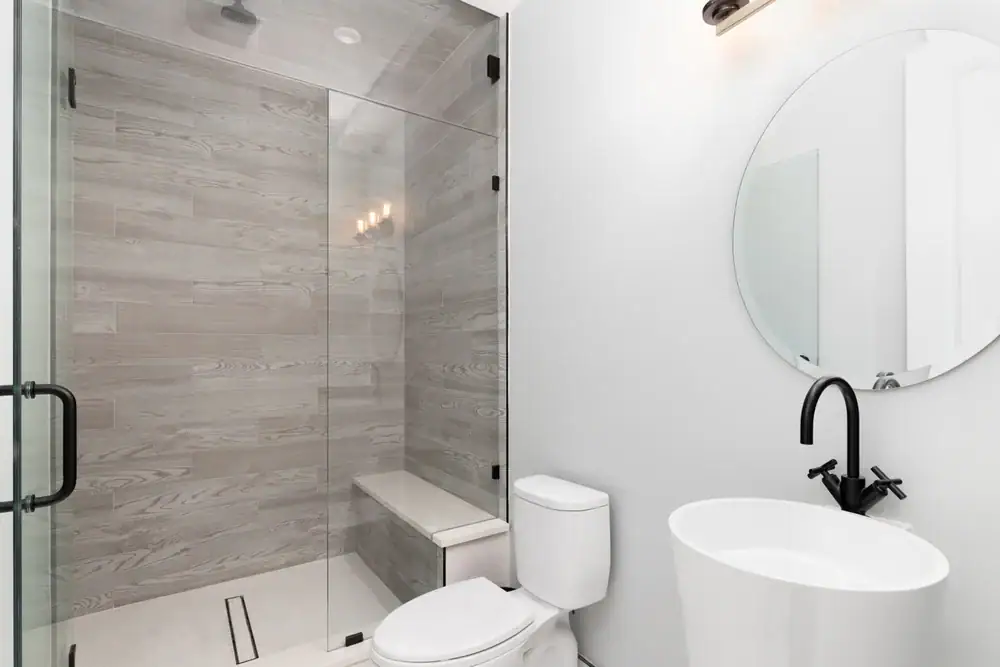
The toughest part of any powder room remodel is making 20 square feet feel like 40. Every design choice either opens up the space or closes it in. Start with your vanity. Traditional floor-mounted cabinets eat up visual real estate and make the room feel cramped. A floating vanity—mounted to the wall with visible floor beneath—instantly creates breathing room. Your eye sees more floor, your brain registers more space.
If storage isn’t critical, skip the vanity altogether. A pedestal sink or wall-mounted basin takes up half the footprint. Sure, you lose cabinet space, but in a guest bathroom where people spend two minutes at a time, do you really need drawers full of supplies? Keep a small basket tucked on a shelf for essentials like hand soap and extra toilet paper.
Toilet placement can make or break the vibe. If your powder room door opens and the toilet is the first thing guests see, that’s awkward. When you’re doing a full bathroom remodeling project and can move plumbing, reposition the toilet so it’s not front and center. If moving plumbing isn’t in the cards, change which way the door swings, or swap it for a pocket door that slides into the wall.
Mirrors work magic in tight quarters. A large mirror—ideally spanning the full width of your vanity—bounces light around and doubles the perceived space. Add sconces on either side or backlight it for even more impact. Layered lighting makes any small bathroom feel less like a closet.
Vertical space is your secret weapon. Most powder rooms have at least one wall that’s doing nothing. Add a narrow shelf above the toilet or mount a slim cabinet up high. You gain storage for hand towels and cleaning supplies without cluttering the floor. Keeping the floor clear is key to maintaining that open, uncluttered feeling.
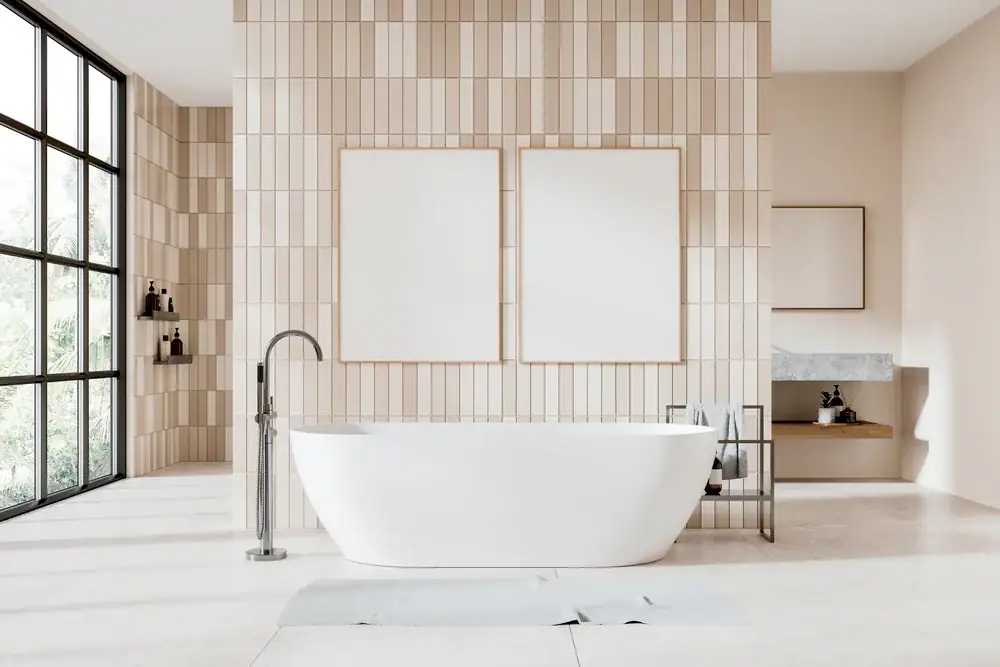
Small spaces mean you don’t need mountains of materials. That’s good news because you can afford to go nicer on what you do choose. This is where you splurge on that statement tile or the faucet you’ve been eyeing.
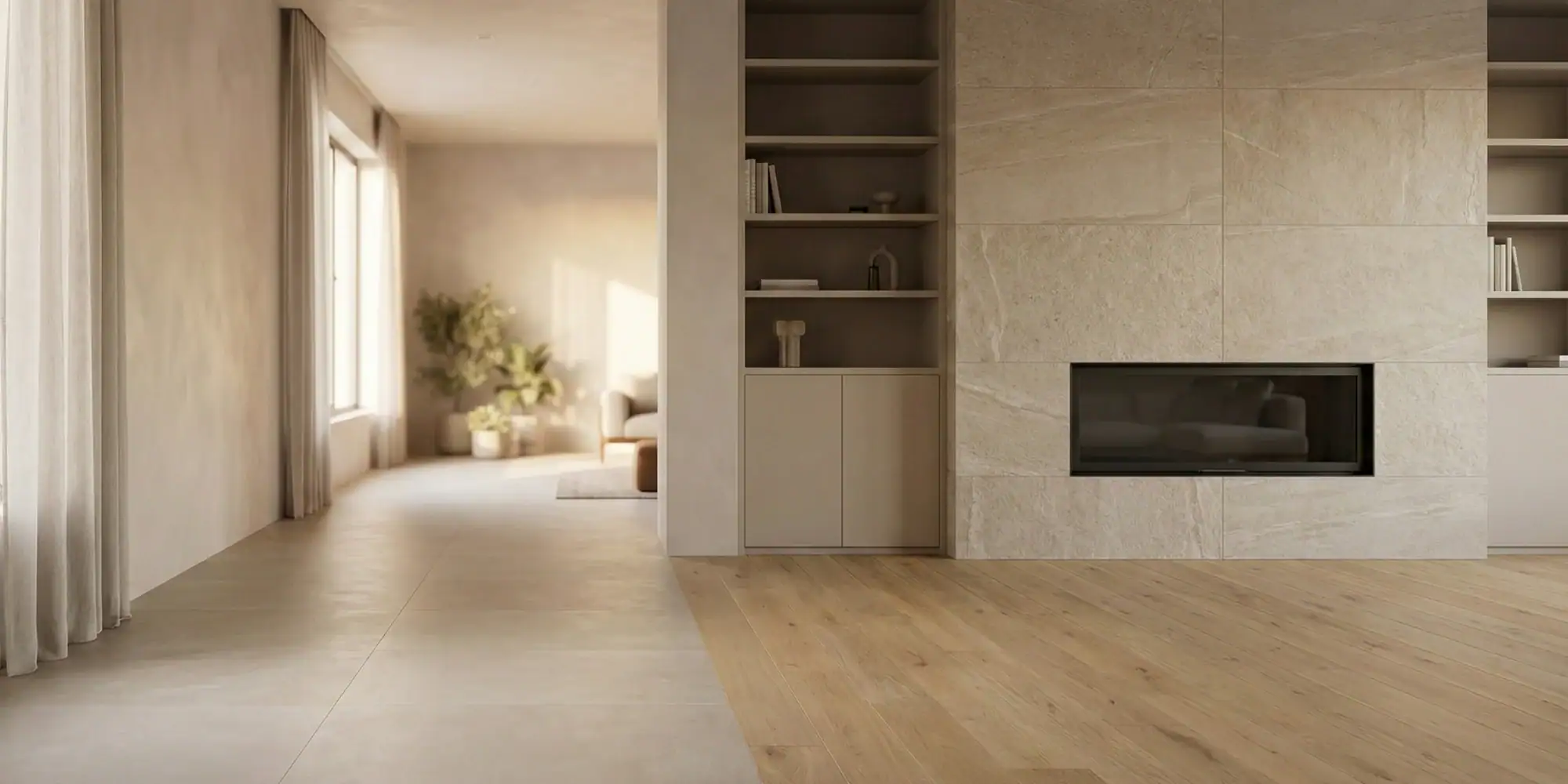
Flooring needs to handle moisture and foot traffic without complaint. Porcelain tile and ceramic tile top the list—durable, water-resistant, and available in every style imaginable. Luxury vinyl plank is another smart choice, especially if you want the look of wood without the moisture worries. For a bolder move, patterned tile turns your floor into a focal point. Geometric designs, hexagon patterns, or encaustic-style tiles add personality without requiring a huge investment.
Walls offer room to play. Paint is the simplest route. Light colors expand the space, but don’t shy away from dark, moody tones like navy, emerald, or charcoal. In a compact powder room, a dark wall feels cozy and intentional, especially when you balance it with good lighting and lighter cabinets or countertops.
Wallpaper belongs in powder rooms. Because the square footage is small, even premium wallpaper won’t wreck your budget. Patterns and textures inject personality fast. Just choose something that can handle humidity if your ventilation is less than stellar.
Your vanity countertop should look sharp and hold up to daily use. Quartz and granite both deliver—moisture-resistant, scratch-resistant, and available in endless colors. If the budget is tight, solid surface countertops give you a similar look for less.
Lighting makes or breaks the space. One overhead light isn’t enough. You need task lighting around the mirror so people can actually see. Wall sconces flanking the mirror are ideal. If sconces aren’t possible, a light bar above the mirror works. Want to elevate the whole room? Add a statement pendant or a small chandelier. It sounds fancy, but in a powder room, it just reads as thoughtful.
Hardware and fixtures tie everything together. Your faucet, toilet paper holder, towel ring, and cabinet pulls should coordinate. Brushed nickel, matte black, brass, and bronze are all solid choices. Mixing metals can work, but it takes a good eye—when in doubt, stick with one finish throughout the space.
Want live answers?
Connect with a American Dream Floor expert for fast, friendly support.
Powder rooms seem simple because they’re small. But small doesn’t mean easy. A few missteps can turn a quick project into a headache—or leave you with a space that still doesn’t work.
Ventilation isn’t optional. Powder rooms need airflow. No window? You need an exhaust fan—one that’s properly sized and vented to the outside. Skipping this step invites moisture buildup, which invites mold, peeling paint, and damaged finishes. Not glamorous, but critical.
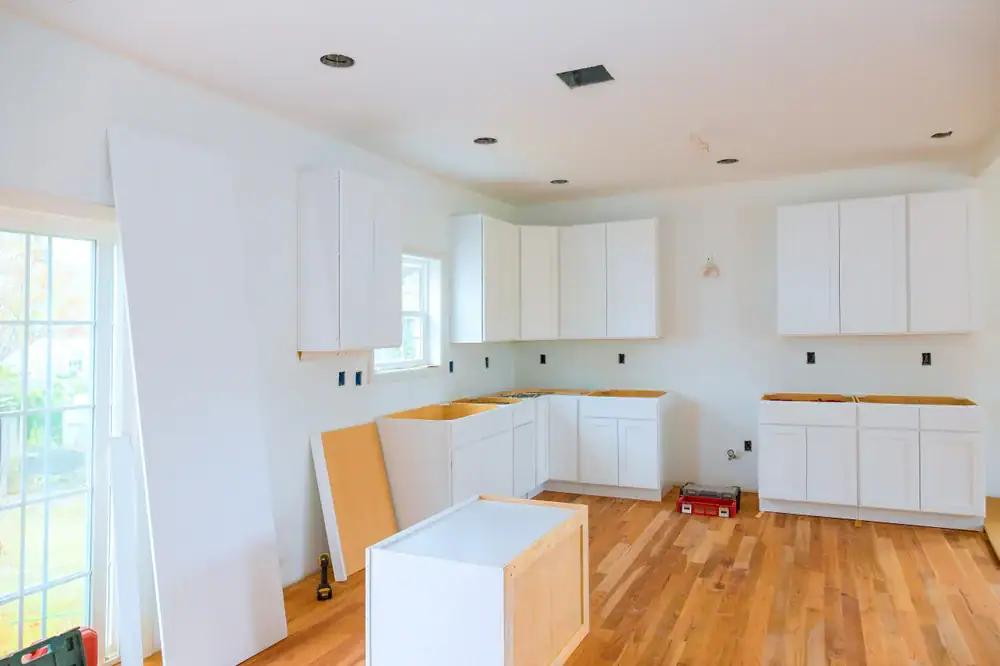
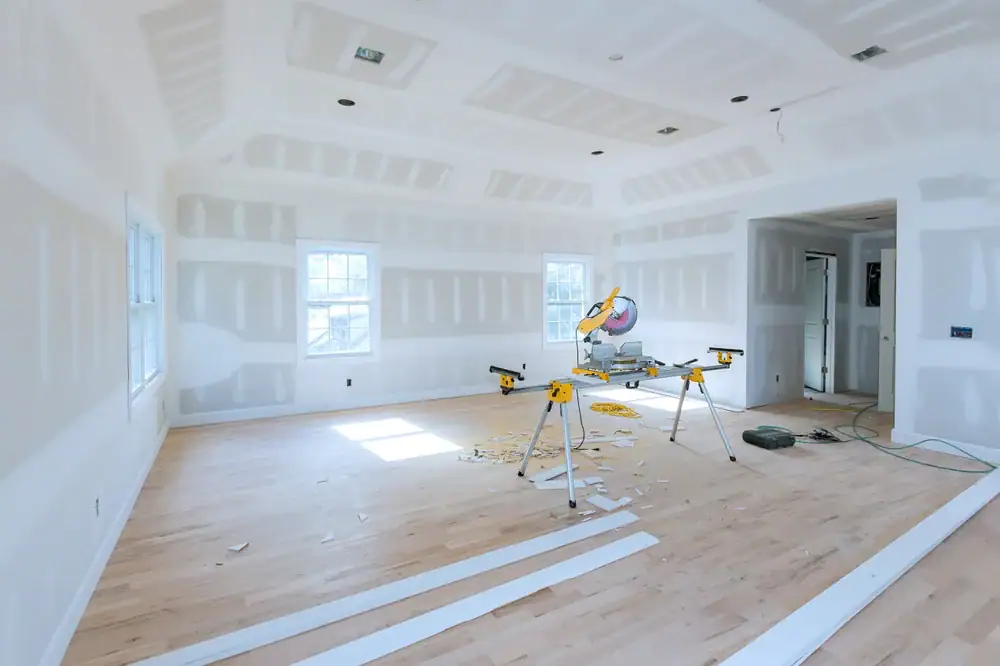
Small spaces tempt DIY ambitions. How hard can a powder room be? Harder than it looks. Even compact bathrooms involve plumbing, electrical work, tile installation, and waterproofing—all areas where mistakes get expensive fast.
If you’re handy, you can probably handle painting, swapping a vanity, or installing a new faucet. But moving plumbing, relocating fixtures, or laying tile? That’s when you want a professional. Licensed contractors know local building codes in Wake County, NC and Horry County, SC, have the right tools, and spot problems before they escalate.
Bad tile work is impossible to hide. Uneven grout lines, tiles that aren’t level, or improper waterproofing behind the tile all lead to bigger issues down the road. Same with plumbing—if a connection isn’t sealed correctly, you won’t know until water’s leaking into your walls. By then, you’re facing a repair bill that dwarfs what you would have paid a pro upfront.
Professional bathroom remodeling also moves faster. What takes you three weekends, we finish in days. Less disruption, less time with a torn-apart bathroom. And if something goes wrong, we fix it under warranty. DIY? You’re on your own.
That doesn’t mean you can’t be involved. Pick your own flooring, choose your fixtures, communicate your vision. Just let the pros handle the technical work—plumbing, tile, electrical. We bring over 25 years of experience to projects across North Carolina and South Carolina, which means fewer surprises and better results.
Cost depends on scope. A basic refresh—new paint, updated vanity, fresh fixtures, maybe new flooring—runs $3,000 to $8,000. You’re keeping the layout intact and not touching plumbing.
A midrange bathroom remodeling project, where you replace everything—flooring, vanity, toilet, sink, lighting, plus tile on walls—typically lands between $8,000 and $15,000. This is the sweet spot. You get a completely transformed space without luxury price tags.
Going all out with custom tile, high-end fixtures, a floating vanity with integrated lighting, or even moving plumbing? Expect $15,000 to $25,000 or more. That sounds steep for a small bathroom, but bathroom remodeling consistently ranks among the top home improvements for return on investment. Midrange projects recoup around 70-80% of their cost, making them smart moves whether you’re staying or selling.
Labor eats the biggest chunk of your budget. Plumbers, electricians, tile installers, and contractors all charge by the hour or project, and rates vary based on location and complexity. In Wake County and Horry County, skilled tradespeople who understand local codes and regional challenges command fair but competitive rates.
Materials add up fast. Tile, countertops, vanities, toilets, sinks, faucets, lighting—it’s a long list. The upside? Because powder rooms are small, you can often afford nicer materials without blowing your budget. Splurging on beautiful tile or a statement light fixture makes a bigger impact here than it would in a larger space.
Budget for surprises. Once walls and floors come up, you might discover old plumbing that needs replacing, water damage requiring repair, or electrical work that’s not up to code. Set aside 10-20% for the unexpected. Better to have that cushion and not need it.
Timeline-wise, most powder room projects take two to six weeks. A simple refresh might wrap in a week. A full gut-and-rebuild with custom tile and new plumbing could stretch to a month, especially if materials are on backorder or permits are required.
Your powder room might be the smallest room in your house, but it doesn’t have to be forgettable. With smart design choices, quality flooring and tile, and a layout that actually works, you can turn that cramped half-bath into a space that feels intentional and impressive.
Focus on what matters: maximizing space with the right fixtures, choosing finishes that add personality without overwhelming the room, and making sure the technical elements—plumbing, ventilation, lighting—are handled correctly. Regardless of if you’re refreshing what you have or starting from scratch, treat this small space with the same care you’d give any other room.
If you’re ready to stop making excuses for your powder room and start showing it off, we bring the expertise, quality materials, and attention to detail that turn bathroom remodeling projects into spaces you’re proud to call your own.
Summary:
Share: