The flooring you choose affects how big your rooms actually feel. Learn the design strategies that make spaces look twice their size without moving a single wall.
Your floor is the largest uninterrupted surface in any room. It sets the baseline for everything else. When that surface is broken up by too many seams, dark tones, or busy patterns, your eye stops moving and the space contracts.
Light reflects differently depending on what’s underfoot. Floors that absorb light make rooms feel smaller and more closed in. Floors that reflect or diffuse light softly do the opposite.
The direction your flooring runs, the width of each plank or tile, even the finish you choose—all of it plays into perception. Regardless of if you’re planning a bathroom remodeling project or updating your kitchen, these principles apply across every room in your home.
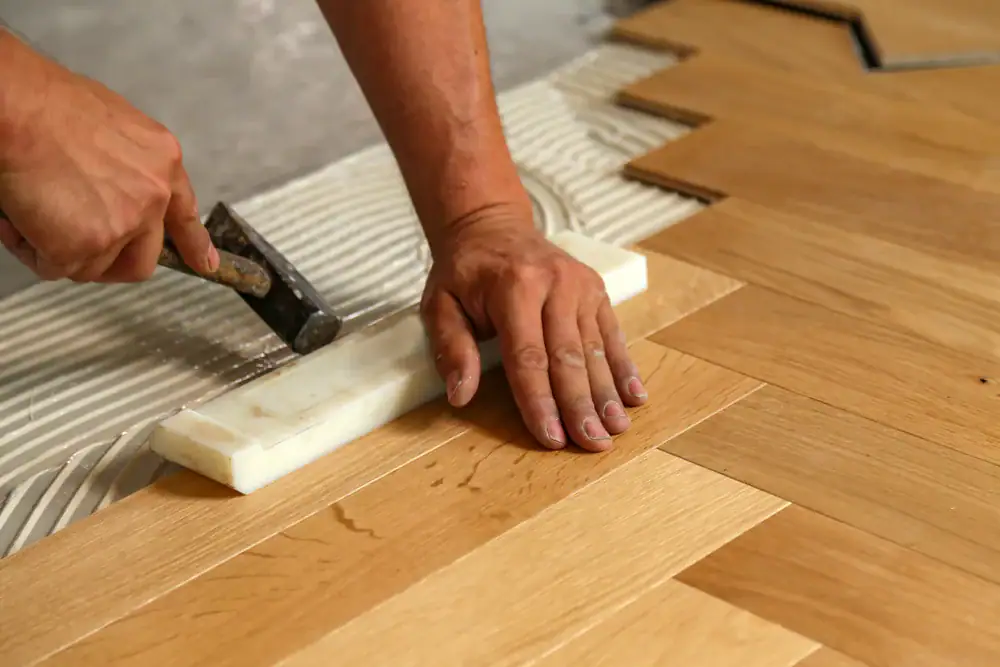
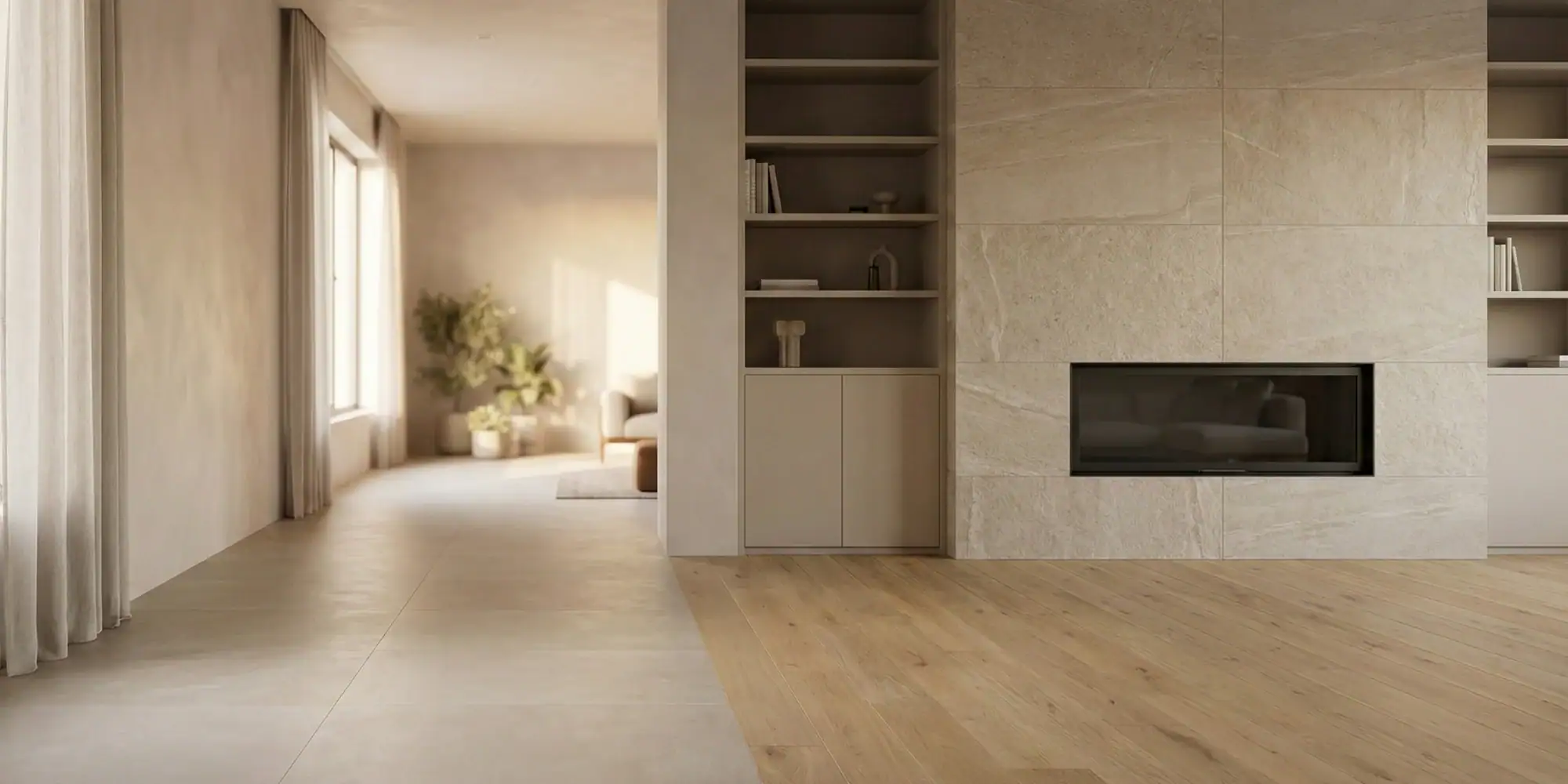
If you want a room to feel bigger, start with lighter tones. Pale wood, soft gray, cream tile—these shades reflect more light and make walls feel farther apart than they are.
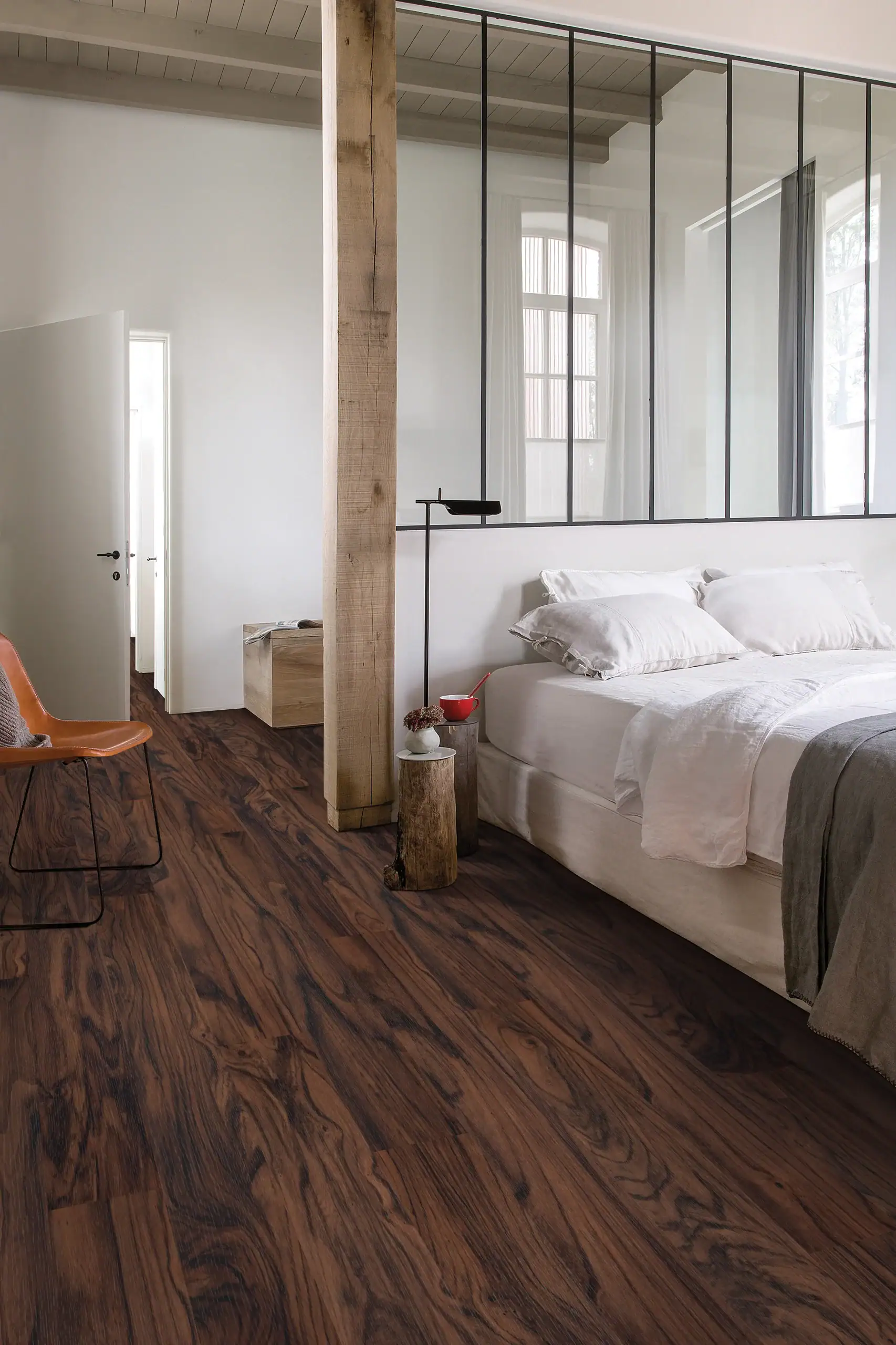
Dark floors can look stunning, but they pull the eye down and create visual weight. In a small room, that weight makes the ceiling feel lower and the walls feel closer. Light floors do the opposite. They lift the space and let natural light bounce around.
This doesn’t mean everything has to be white or washed out. Warm honey tones, light oak, or soft greige—trending heavily in 2026—still give you character while keeping the room open. The key is staying in the lighter half of the color spectrum.
And if you’re working with a room that doesn’t get much natural light, this becomes even more important. Light-colored flooring compensates for what the windows can’t provide. It brightens the space from the ground up and makes it feel less like a cave.
You’ll see this principle used constantly in open-concept homes throughout Wake County, NC and Raleigh, NC. Builders and designers know that lighter floors help those big, flowing spaces feel even more expansive. It’s one of the simplest ways to add perceived square footage without changing the floor plan.
Pair light flooring with light walls and you get an airy, cohesive look. Or contrast it with darker furniture and fixtures to create depth without sacrificing openness. This approach works beautifully in bathroom remodeling projects where space is at a premium. Either way, you’re starting from a foundation that works with the space, not against it.
Narrow planks and small tiles create visual clutter. Every seam, every grout line, every transition—your eye has to process all of it. That processing makes a room feel busy and smaller than it actually is.
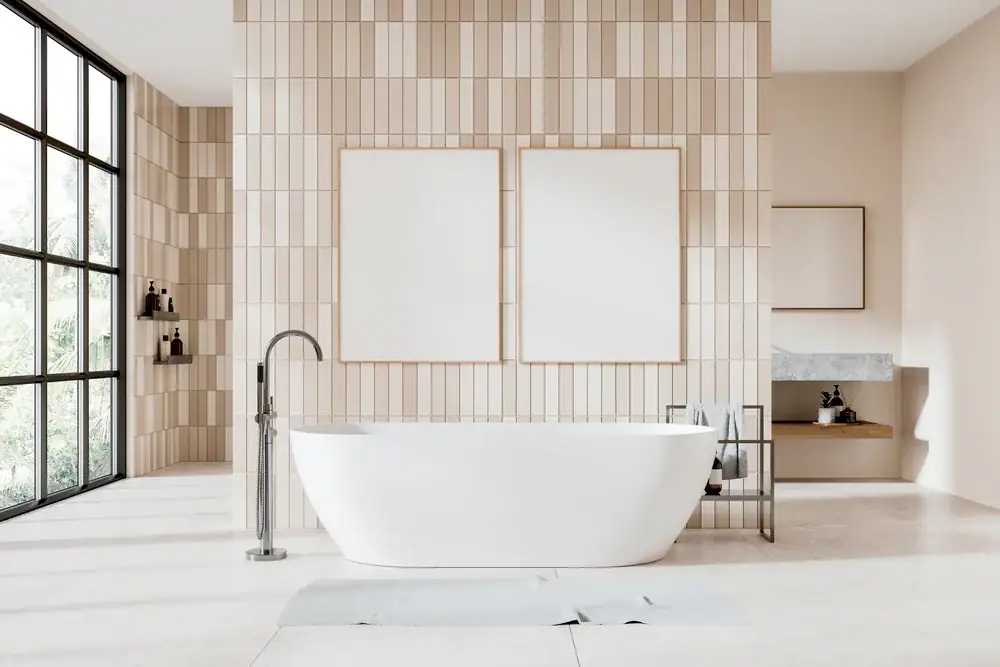
Wide planks do the opposite. Fewer seams mean smoother visual flow. Your eye travels across the floor without interruption, and that continuity makes the room feel longer and more open. The same logic applies to large format tiles. A 12×24 tile has fewer grout lines than a 6×6, and that difference is immediately noticeable.
This trend is everywhere in 2026. Homeowners are moving toward wider wood planks—often 7 inches or more—and oversized tiles that minimize breaks in the surface. It’s not just about aesthetics. It’s about creating the perception of more space with less visual noise.
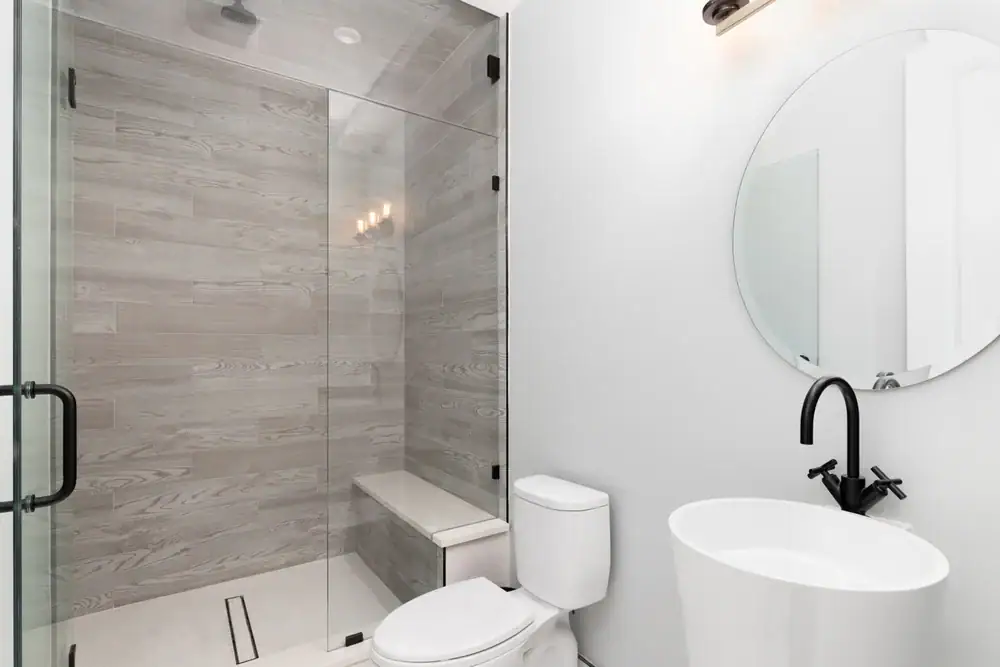
In a small bathroom, switching from standard tile to large format can completely change how the room feels during a bathroom remodeling project. Suddenly it’s not a cramped 5×8 anymore. It’s a clean, streamlined space that feels intentional and open.
The same goes for living rooms and kitchens. Wide plank luxury vinyl or hardwood stretches the eye across the room. You notice the space, not the seams. And in open floor plans common throughout Horry County, SC and Myrtle Beach, SC homes, that uninterrupted flow ties everything together without making it feel segmented.
Flooring installation matters here too. Running wide planks parallel to the longest wall emphasizes length. Running them diagonally can add even more visual interest and make a square room feel less boxy. Either way, the width of the material is doing the heavy lifting.
One more thing—large format doesn’t mean you lose detail or character. Modern luxury vinyl plank and porcelain tile replicate wood grain and stone texture so well that you get all the visual appeal without the maintenance problems. You’re not sacrificing style for space. You’re getting both.
Want live answers?
Connect with a American Dream Floor expert for fast, friendly support.
The way your flooring is laid down matters just as much as what you’re laying down. Direction changes everything. Run planks the wrong way and a narrow hallway feels even tighter. Run them the right way and suddenly there’s breathing room.
Most flooring installation professionals will tell you to follow the longest wall. That’s solid advice. It elongates the space and draws the eye forward instead of side to side. But there are other strategies depending on the room shape and how you want it to feel.
Diagonal installations can make square rooms feel less static. The angled lines create movement and break up the rigidity of four walls meeting at 90 degrees. This works particularly well in kitchen remodeling projects where you want the floor to complement new cabinets and countertops without overwhelming the design.
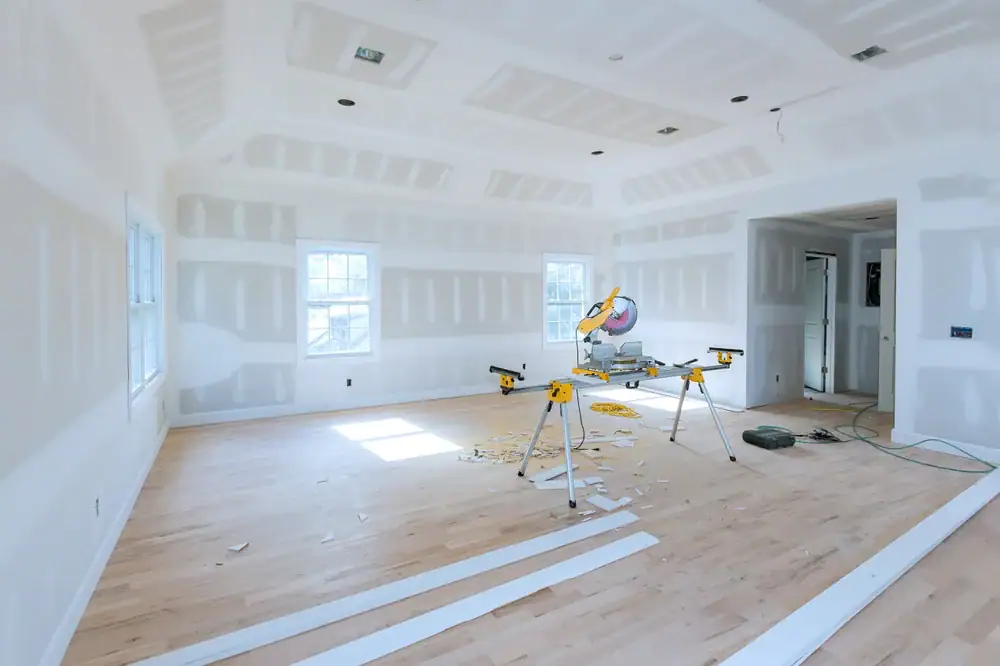
This is the default for a reason. When you run planks or tiles parallel to the longest wall, you’re emphasizing length. The lines pull your eye from one end of the room to the other, making the space feel stretched out.
It’s especially effective in narrow rooms—hallways, galley kitchens, long living rooms. Anything that already has one dimension longer than the other benefits from reinforcing that length with the flooring direction.
You also get a cleaner, more cohesive look. The flooring feels like it’s part of the architecture instead of fighting against it. And because most rooms aren’t perfectly square, aligning with the longest wall helps disguise any irregularities in the layout.
This approach works across all flooring types. Hardwood, luxury vinyl plank, laminate, even tile—if you’ve got a rectangular room, parallel installation is your friend. It’s straightforward, it’s effective, and it doesn’t require any special tricks.
In homes throughout Wake County, NC, this technique shows up in everything from master bedrooms to open-concept living areas. It’s a foundational principle that just works, especially when you’re trying to maximize the feel of a space without doing anything dramatic.
One thing to watch for during flooring installation: make sure your installer accounts for the room’s actual shape, not just what it looks like on paper. Rooms are rarely perfectly square, and starting lines need to be adjusted so the flooring doesn’t end up looking crooked where it matters most—doorways, focal points, transitions between rooms.
Diagonal layouts aren’t as common, but they can be a game-changer in the right situation. When you install flooring at a 45-degree angle, you create visual movement that breaks up the boxiness of a square room. The eye follows those angled lines, and the space feels more dynamic and less confined.
This works particularly well in entryways, small dining rooms, or any space where you want to make a statement without adding square footage. The diagonal pattern draws attention and makes people notice the floor in a way that adds depth instead of clutter.
There’s a trade-off, though. Diagonal installations require more material because of the cuts at the edges, and they take more time to lay correctly. You’re paying a bit more in labor and materials, but the result is a room that feels intentional and well-designed.
Continuous layouts are another powerful tool. When you run the same flooring throughout multiple rooms without breaks or transitions, the entire area reads as one large space. This is huge in open floor plans where the kitchen flows into the dining room and then into the living room.
Instead of chopping up the space with different materials or direction changes, you let the floor unify everything. It’s one of the most effective ways to make a home feel bigger without moving walls or adding windows. The continuity tricks the eye into seeing more space than there actually is.
You see this approach all the time in modern homes throughout Horry County, SC. Luxury vinyl plank or wide plank hardwood running from the front door all the way to the back of the house, no interruptions. It creates flow, it simplifies the design, and it makes every room feel like part of a larger whole.
The key is choosing a flooring material that works in every room. That usually means something water-resistant like luxury vinyl tile or engineered wood that can handle kitchens, bathrooms, and living areas without needing different products for different moisture levels. This becomes especially important when you’re coordinating flooring with kitchen remodeling or bathroom remodeling projects where cabinets and fixtures need to work together visually.
Your floor sets the tone for how a room feels. Light colors, wide planks, large format tiles, smart layout choices—all of these add up to spaces that feel more open, more functional, and more inviting. You don’t need to knock down walls to get more room. You just need to be strategic about what’s underfoot.
If you’re planning a flooring installation, bathroom remodeling, or kitchen remodeling project in Wake County, NC or Horry County, SC, start with how you want the space to feel. Then work backward to the materials, colors, and installation methods that get you there. It’s not about following trends for the sake of trends. It’s about making choices that actually improve how you live in your home.
We’ve been helping homeowners make these decisions for over 25 years. No matter if it’s flooring, bathroom remodeling, kitchen updates, or cabinets, our focus is always on getting it right the first time—so your investment works the way it should.
Summary:
Share: